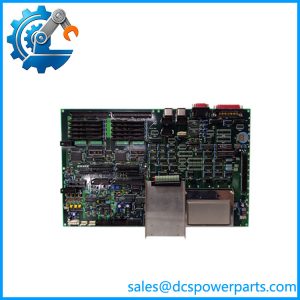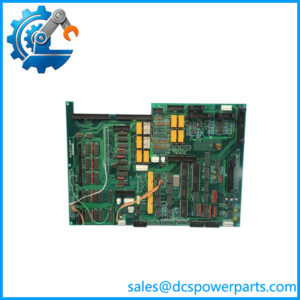
Description
Technical Specifications
| Parameter | Specification |
|---|---|
| Manufacturer | KOKUSAI |
| Model | SMPCONT-A3B |
| Product Type | RPM Measuring / Control Board |
| Primary Function | Rotational-speed measurement |
| Typical Equipment | Industrial balancing machines |
| Associated Part Marking | 48E-0025 / 43B-0070 |
| Measurement Variable | RPM / rotational speed |
| Application | Machine measurement and control |
| Interface | System-specific |
| Power Supply | Verify from machine documentation |
| Sensor Input | Verify from original board/system |
| Mounting | Equipment-specific |
| Firmware | System/revision dependent |
| Replacement Status | Legacy / specialized equipment |
A particularly useful historical record identifies “RPM MEARING [MEASURING] BOARD SMPCONT-A3B 48E-0025 (43B-0070)” as a part of a balancing machine imported from Japan. This is stronger evidence for the board’s actual role than generic reseller pages that describe it as a conventional PLC controller.
Product Introduction
The KOKUSAI SMPCONT-A3B is a specialized industrial measurement/control board associated with KOKUSAI equipment. Available historical trade data specifically identifies the SMPCONT-A3B 48E-0025 (43B-0070) as an RPM measuring board and identifies it as a component of a balancing machine.
The KOKUSAI SMPCONT-A3B should therefore not automatically be classified as a standard PLC CPU simply because some current secondary-market listings describe it as a general-purpose “control module.” Those descriptions are inconsistent with the historical equipment record, which gives a much more specific functional description: an RPM measurement board used in balancing machinery.
In a balancing-machine application, rotational-speed feedback is fundamental to the measurement process. The control electronics must acquire the rotational signal from the machine’s sensing system and use it as part of the measurement sequence. The exact sensor technology, signal conditioning, RPM range, and communication interface depend on the original KOKUSAI machine configuration.
The SMPCONT-A3B may therefore be difficult to replace using generic automation hardware. Its electrical interface and firmware are likely tied to the host balancing-machine architecture, making the original board revision and associated machine documentation important during procurement.
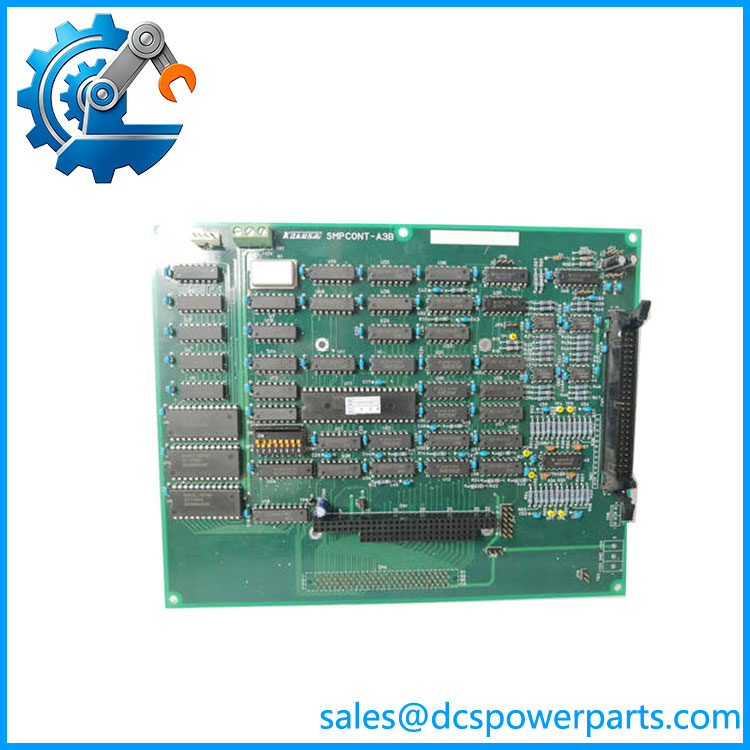
SMPCONT-A3B
Main Features & Field Considerations
Dedicated RPM measurement
The strongest available evidence identifies the as an RPM measuring board rather than a generic PLC module.
Balancing-machine integration
The board appears in historical records specifically as a component of a balancing machine. This suggests that its function is closely tied to the machine’s rotational measurement and balancing sequence.
Specialized hardware
Unlike a standard PLC module, a specialized measurement board may depend on proprietary signal conditioning, firmware, connector pinouts, and host-machine software.
Important replacement checks
Before replacing a , verify:
- Exact board marking
- 48E-0025 / 43B-0070, if present
- Machine model and serial configuration
- RPM sensor type
- Sensor supply voltage
- Pulse/signal format
- Connector pinout
- Expected RPM range
- Firmware revision
- Calibration parameters
- Host controller compatibility
Troubleshooting
If RPM measurement is incorrect, check the complete signal path:
- Speed sensor
- Sensor power
- Sensor-to-board wiring
- Connector contacts
- Signal amplitude/frequency
- input circuitry
- Machine calibration
- Host measurement software
This avoids replacing the board when the actual problem is a damaged pickup or incorrect sensor alignment.
Typical Applications
The is associated with specialized machine-control and measurement equipment, with historical evidence specifically pointing to:
- Dynamic balancing machines
- Rotational-speed measurement
- Machine measurement systems
- Industrial rotating-equipment test systems
Procurement Note
For , I would use the complete board marking and host-machine information rather than relying on generic online specifications. The strongest independent evidence currently available identifies 48E-0025 (43B-0070) as an RPM measuring board for a balancing machine.
I would not publish specifications such as 24 VDC input, Ethernet ports, 16 digital inputs, 8 relay outputs, or ±10 V analog inputs as confirmed facts for this part. Those specifications appear in some secondary listings, but I could not corroborate them against reliable KOKUSAI documentation.
For a replacement, match the board revision, 48E-0025/43B-0070 marking where applicable, sensor interface, and original balancing-machine configuration before installation.