Description
Honeywell L28490P05 / C7061A UV Flame Detector
Product Overview
The Honeywell L28490P05 / C7061A is a dynamic self-checking ultraviolet flame detector designed to monitor the UV radiation generated by combustion. It is intended for burner-management and flame-safeguard applications involving natural gas, LP gases, oil, and other carbon-containing fuels. Honeywell identifies the C7061A as the standard-housing version of the C7061 family, while the C7061F uses an explosion-proof housing for hazardous-location applications.
The Honeywell C7061A does more than provide a simple UV presence signal. Its dynamic self-check arrangement uses an oscillating shutter to periodically interrupt the UV path and verify detector operation. Honeywell documentation states that the shutter interrupts the ultraviolet radiation 12 times per minute, creating a continuous integrity check of the sensing tube. The detector works with the appropriate Honeywell flame amplifier and burner-control system as part of a closed-loop flame-supervision arrangement.
In a practical burner system, this component belongs on the flame-sensing side of the burner-management system, not the PLC/DCS I/O side. The detector observes the flame; the compatible amplifier processes the flame signal and interfaces with the burner programmer or flame safeguard controller. That distinction matters during a legacy replacement because changing the detector, amplifier, or controller independently can alter the flame-safeguard architecture.
Product Introduction
Flame scanners are safety devices, and the failure mode matters as much as the nominal detection range. The L28490P05 / C7061A uses dynamic UV self-checking rather than relying solely on a static UV sensor output, allowing the associated flame safeguard system to verify detector integrity during continuous operation.
For a legacy burner replacement, match the complete detector configuration, amplifier, mounting arrangement, sensing tube, and burner-control platform. Do not substitute a C7061F hazardous-location model for a C7061A simply because the sensing principle is similar.
Key Technical Specifications
| Parameter | Specification |
|---|---|
| Product Model | C7061A |
| Spare Part Number | L28490P05 |
| Manufacturer | Honeywell |
| Product Type | Dynamic Self-Check UV Flame Detector |
| Detection Method | Ultraviolet flame radiation |
| Typical Fuels | Natural gas, LP gas, oil, and other carbon-containing fuels |
| UV Sensor | Replaceable ultraviolet sensing tube |
| Self-Check Method | Oscillating shutter |
| Shutter Check Rate | 12 interruptions per minute |
| Compatible Amplifier | R7861A for applicable 7800 Series systems |
| SLATE Amplifier | R8001S1051 |
| Flame Signal | 1.25–5 VDC with 7800 Series; up to 8 VDC with SLATE |
| Ambient Temperature | -40°C to +70°C |
| Storage Temperature | -51°C to +85°C |
| Housing | Standard housing |
| Enclosure | NEMA 4 documented for |
| Viewing Window | Quartz |
| Mounting | Sight-pipe / burner-flame viewing installation |
| Power | Supplied through the associated flame-safeguard/control arrangement |
| Firmware | No user-configurable firmware |
| Primary Application | Burner flame supervision |
Honeywell’s current product information gives the flame-signal range as 1.25–5 VDC with 7800 Series controls and up to 8 VDC with SLATE. Older product documentation also specifies the detector as a self-checking UV device and identifies the UV sensing tube and quartz viewing window as field-replaceable components.
Older documentation identifies specific electrical variants such as C7061A1004 at 120 VAC, 50/60 Hz and C7061A1020 at 115/230 VAC, 50/60 Hz. Those suffix-specific electrical values should not automatically be assigned to every L28490P05/ assembly without checking the actual nameplate.
Major Features and Practical Advantages
1. Dynamic UV self-checking
The central feature of the is its dynamic self-check mechanism. An oscillating shutter periodically blocks UV radiation reaching the sensing tube. The burner-management system can therefore verify that the detector and associated sensing circuit are behaving as expected rather than simply assuming that a constant signal represents a healthy scanner. Honeywell specifies 12 shutter interruptions per minute in its product data.
This is particularly important in continuous-operation burner applications. A flame detector that produces a signal but has lost part of its sensing function is a very different failure from a detector that simply goes open-circuit.
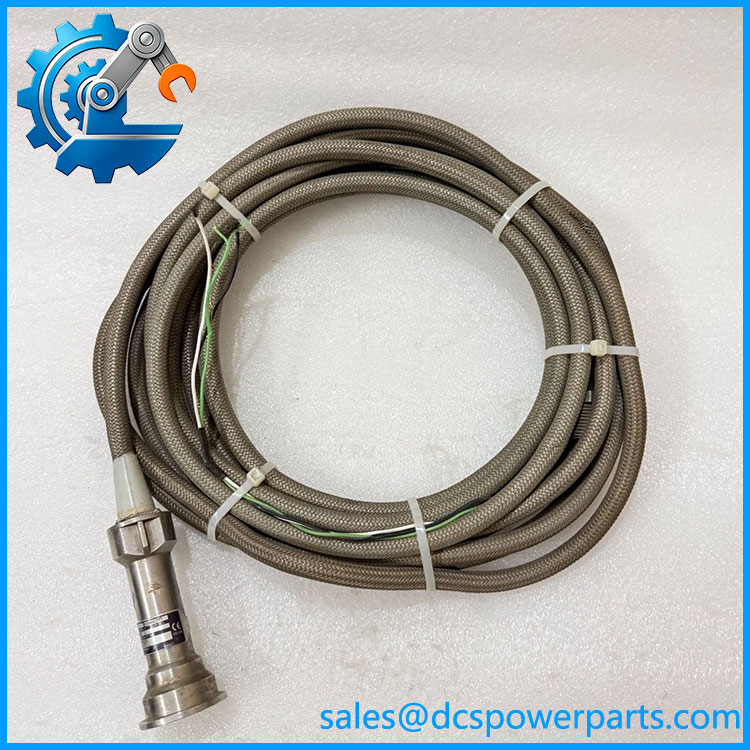
L28490P05
2. UV detection of combustion flames
The responds to ultraviolet radiation generated by combustion. Honeywell specifies applications involving gas, LP gases, oil, and other carbon-containing fuels. The detector therefore belongs directly in burner flame-safeguard applications rather than general process instrumentation.
3. Compatible with Honeywell burner-management hardware
The is designed to operate with the appropriate Honeywell dynamic self-check amplifier. Honeywell currently identifies R7861A for applicable 7800 Series systems and R8001S1051 for SLATE. Older documentation also identifies R7061/R4348 combinations for applicable legacy systems.
The practical lesson is simple: verify the existing amplifier before ordering the detector. The scanner should be treated as part of a flame-detection chain, not as an isolated sensor.
4. Field-replaceable sensing components
Honeywell documentation identifies the ultraviolet sensing tube and quartz viewing window as field-replaceable. This can reduce the need to replace the complete detector when the sensing element or optical window is the actual failed component, subject to the approved maintenance procedure.
The quartz window also needs to remain clean. Soot, deposits, condensation, or physical damage can attenuate UV reaching the sensing tube and produce symptoms that resemble electrical failure.
5. Flexible mounting orientation
The C7061 family can be mounted horizontally, vertically, or at intermediate angles, subject to the installation requirements and correct faceplate alignment. Honeywell specifically notes that self-checking C7061 models require proper faceplate alignment so the shutter mechanism operates correctly.
This is not a cosmetic installation detail. Incorrect alignment can affect the self-check mechanism.
6. Standard versus hazardous-location housing
The and C7061F use the same general UV detection concept but have different housing arrangements. The is the standard-housing version, while C7061F models are designed for explosion-hazardous installations with explosion-proof construction and associated approvals.
Do not treat the A/F distinction as a minor enclosure option. Area classification and certification requirements can determine which detector is permissible.
7. Continuous-operation flame supervision
Honeywell identifies C7061-series models as suitable for continuous operation because of the dynamic self-check arrangement. The detector is intended to be part of a properly configured flame safeguard system, where flame presence and detector integrity are both supervised.
Related Products
- C7061A1020 — Specific electrical configuration documented for 115/230 VAC, 50/60 Hz applications. Verify complete nameplate before substitution.
- C7061A1004 — variant documented for 120 VAC, 50/60 Hz applications.
- C7061F1003 — Explosion-proof C7061F version with a different housing and hazardous-location application.
- C7061F — Explosion-proof version of the dynamic self-check UV detector family.
- C7961E/F — Solid-state UV flame-detector family using the same /F mechanical enclosure, intended as a newer detector technology.
- R7861A — Honeywell 7800 Series dynamic self-check UV flame amplifier compatible with applicable configurations.
- R8001S1051 — SLATE flame amplifier used with applicable / installations.
- R7061 — Legacy dynamic self-check UV amplifier used with applicable C7061 installations.
- R4348 — Flame switch used with applicable older C7061/R7061 configurations.
FAQ
What is L28490P05?
Public spare-parts listings identify as a spare part number associated with the Honeywell UV flame detector. The underlying model is confirmed by Honeywell documentation as a dynamic self-checking UV flame detector.
Is a PLC or DCS input device?
No. It is a burner flame detector. Its output is intended for the appropriate Honeywell flame amplifier and burner-control architecture. The detector should not be treated as a generic 4–20 mA or digital field transmitter.
How does the self-check itself?
An internal oscillating shutter periodically interrupts UV radiation reaching the sensing tube. Honeywell’s product data specifies approximately 12 shutter interruptions per minute. The associated control/amplifier system uses this behavior to verify detector integrity.
Which amplifier should I use with ?
For applicable Honeywell 7800 Series installations, Honeywell identifies the R7861A dynamic self-check UV amplifier. For SLATE, Honeywell identifies R8001S1051. Older installations may use R7061 with an R4348 flame switch. The installed burner-control architecture should determine the correct amplifier.
Can I replace a with a ?
Not automatically. The uses an explosion-proof housing intended for hazardous-location applications, while the is the standard-housing model. The replacement must satisfy the site’s area classification, approvals, mechanical installation, and electrical requirements.
Can I hot-swap the ?
No. Treat it as a burner-safety component. The burner should be placed in the approved safe maintenance state, power isolated as required, and the manufacturer’s burner-management procedure followed before removing or installing the detector.
Does have firmware?
There is no user-configurable firmware specification for the detector itself. The important compatibility points are the detector model, sensing tube, amplifier, burner programmer, wiring, mounting arrangement, and complete flame-safeguard system.
What should I inspect if a replacement still gives a weak flame signal?
Start with the optical path rather than immediately blaming the detector. Inspect the quartz viewing window, sight pipe, detector alignment, flame geometry, wiring, amplifier, and flame signal at the specified test point. Deposits on the viewing window or incorrect sighting can produce weak or intermittent UV signals even when the detector electronics are healthy.
Procurement Note
The Honeywell / should be treated as a flame-safeguard component, not ordinary process instrumentation. Verify the complete detector designation and nameplate before procurement because has multiple electrical variants. Honeywell documentation confirms, for example, separate C7061A1004 and C7061A1020 configurations.
For New Surplus or previously installed inventory, inspect the UV viewing window, sensing-tube condition, housing, terminal block, mounting flange, wiring, and shutter mechanism. Storage age also deserves attention because this is an optical/electromechanical safety component rather than a passive terminal assembly.
Most importantly, verify the amplifier and burner controller at the same time. A that is mechanically compatible but paired with the wrong flame amplifier is not a valid replacement. Honeywell’s current documentation specifically associates with R7861A for 7800 Series applications and R8001S1051 for SLATE.
For legacy burner maintenance, the correct replacement strategy is therefore to match / + electrical variant + amplifier + burner-management system + mounting/sighting arrangement, rather than purchasing solely on the family name.