Description
HIMA H41q-B4237-2 — H41q-HRS Redundant Safety Controller Assembly
Product Introduction
When maintaining an older HIMA safety system, the procurement problem is often misidentifying the assembly level. HIMA H41q-B4237-2 is not simply another CPU module with a B4237 suffix. HIMA’s certification documentation identifies B4237-1/-2 as the compact H41q-HS/HRS automation-device family, with B4237-2 specifically associated with the H41q-HRS configuration.
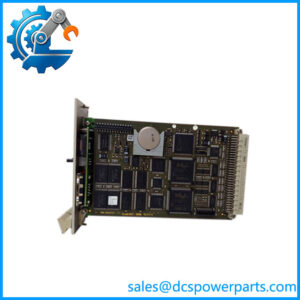
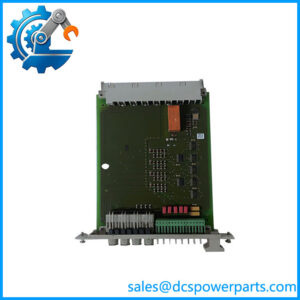
The B4237-2 assembly provides the hardware framework for a redundant H41q safety controller. Available technical documentation identifies a K 1409 19-inch, 5-HU system rack, two F8652A central modules, two F7130A 24/5 VDC power-supply modules, rear power-distribution/protection components, and the HRS-specific backplane arrangement. This matters during replacement: purchasing an individual F8652A or F7130A does not constitute replacement of the complete -2 assembly.
Key Technical Specifications
| Parameter | Specification |
|---|---|
| Product Model | H41q–2 |
| Assembly Designation | |
| Manufacturer | HIMA |
| System Family | PES H41q |
| System Variant | H41q-HRS |
| Product Type | Redundant safety-related controller/system assembly |
| Rack | K 1409 |
| Rack Format | 19-inch |
| Rack Height | 5 HU |
| Central Modules | 2 × F8652A |
| Power Supply Modules | 2 × F7130A |
| Power Supply Type | 24 VDC input / 5 VDC output |
| I/O Bus Architecture | Redundant backplane I/O bus |
| Communication Expansion | Provision for communication modules |
| Rear Protection | Z6011 / Z6012 / Z6013 assemblies |
| HRS-Specific Jumper | Z6017 |
| System Category | Safety-related H41q automation assembly |
| Certification Status | -1/-2 listed by HIMA as valid safety-related device types |
| Safety Report | TÜV Rheinland 968/FSP 1254.00/16 |
HIMA’s certification/version list identifies as the H41q-HS/HRS safety-related automation device family and lists revision 03 for that device type. The individual modules and exact revision should still be checked against the nameplate and project documentation.
Major Features and Engineering Advantages
Redundant H41q-HRS architecture
The key distinctf is its HRS architecture. HIMA documentation describing the assembly shows that the H41q-HRS arrangement uses a redundant I/O bus rather than the single-channel bus arrangement used for H41q-HS. The rear jumper arrangement is different as a result.
This is not a cosmetic configuration difference. During a brownfield replacement, installing hardware intended for the wrong bus architecture can prevent the expected redundant configuration from operating correctly.
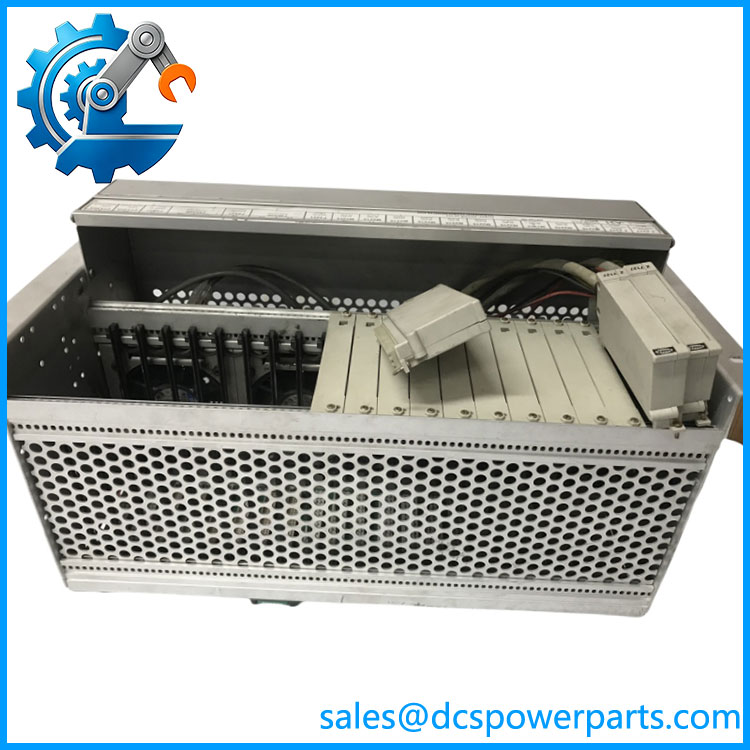
H41Q-B4237-2
Dual central modules
The docud assembly contains two F8652A central modules, identified as CU1 and CU2. This provides the paired central-processing arrangement associated with the redundant H41q-HRS architecture.
For procurement, this meae identifier should be kept separate from the F8652A component number. The former identifies the system assembly; the latter identifies one of its constituent central modules.
Dual HIMA F7130A power modules
Two F7130A power-supply modules are included in the documented assembly. F7130A is the HIMA 24/5 VDC power module used to supply the H41q electronics.
That distinction is useful when diagnoa cabinet: a controller fault, power-module fault, rear distribution fault, or redundant-bus issue can produce overlapping symptoms. Replacing the CPU first is not necessarily the correct troubleshooting sequence.
Integrated 19-inch system rack
e assembly uses a K 1409 19-inch, 5-HU rack with an integrated cable tray and hinged labeling arrangement. The rear assembly includes power decoupling, fusing, fan monitoring, and WD-signal supply components.
For a complete system replacement, the rack and rear assemblies therefore form part of the procurement scope. A loose central module is not equivalent to a coe assembly.
HRS-specific backplane arrangement
The H41q documentation states that the central modules and I/O modules communicate through the backplane bus. For the redundant HRS arrangement, the jumper used to combine separated I/O buses is not installed in the same manner as the single-channel H41q-HS configuration.
This is one of the details that can be missed when an old rack is rebuilt from individual spare modules.
Application Scenarios & Field Pain Points
Emergency shutdown systems
The H41q platform is intended for safety-related automation applications where redundant processing and fault monitoring are req. provides the H41q-HRS hardware framework for these installations.
Process safety systems
The architecture can be encountered in older process plants where HIMA PES equipment remains responsible for safety logic while the DCS handles normal process control.
Brownfield H41q maintenance
e designation is especially important when replacing an obsolete or damaged H41q installation. The correct central modules, power modules, I/O rack, bus configuration, and rear wiring arrangement should be considered together.
High-availability safety architectures
The HRS designation indicates the redundant I/O-bus configuration. HIMA’s official version list distings from -1 by the H41q-HRS versus H41q-HS system configuration.
Related Products
- — H41q-HS version of the assembly; it has a different I/O-bus arrangemenm .
- HIMA F8652A — Central module used in the docud assembly.
- — 24/5 VDC power supply module used e assembly.
- HIMA K 1409 — 19-inch, 5-HU system rack associated with the assembly.
- HIMA B4235 — Compact H41q-MS automation device.
- HIMA B5231 — Modular H51q-MS automation device.
- HIMA B5233-1/-2 — H51q-HS/HRS safety-related assemblies.
- HIMA B9302 — H41q/H51q I/O rack family.
HIMA’s official certification list groups -1/-2 with B4235 and B5231/B5233 device families, confirming that these are system-level safety assemblies rather than interchangeable individual I/O cards.
Engineer’s Guide — Field Pitfalls to Avoid
1. Do not as merely a CPU.
The assembly incorporates multiple hardware elements. Available documentation specifically identifies two central modules and two power supplies.
2. Do not confuse d .
-1 corresponds to H41q-HS,e corresponds to H41q-HRS. The backplane/I/O-bus configuration is different.
3. Check the rear jumper configuration.
The H41q documentation specifically describes the Z6007 jumper arrangement and its relationship to single versus redundant I/O-bus oper. uses the HRS configuration and associated rear hardware.
4. Verify the complete assembly before replacing a rack.
The documented package includes the K 1409 rack, rear protection/distribution components, central modules, and power supplies. A procurement order for only the visible front modules may leave critical hardware missing.
5. Check hardware and certification revision.
HIMA’s current version list identifies -1/-2 as revision 03 in the cited safety-related certification record. The actual unit should be checked against the applicable project safety documentation rather than assuming every histl assembly has identical revision status.
6. Do not assume modern Ethernet specifications.
Some secondary listings dee with integrated Ethernet, PROFIBUS, Modbus, or other communications. Those claims are not established by the HIMA certification material I found. Communication capability depends on the installed communication modules and system configuration, so it should not be advertised as an int specification.
FAQ
What is HIMq-?
q- is the safety-related automation assembly for the H41q-HRS system. HIMA’s certification list identi/-2 as the H41q-HS/HRS compact automation-device family.
Iq- a complete controller?
It is better described as a system/controller assembly rather than a single controller card. Documentation fe assembly identifies a K 1409 rack, two central modules, two power supplies, and associated rear hardware.
What is the difference bd ?
is associated with H41q-HS,e is associated with H41q-HRS. The HRS version uses a redundant I/O-bus arrangement, which affects the backplane and rear jumper configuration.
Which CPU modules are used iq-?
The docud assembly contains two central modules, identified as CU1 and CU2.
Which power supplies are used?
The documented assembly contains two power supply modules, designated PS1 and PS2. is the HIMA 24/5 VDC power-supply module used with the H41q architecture.
s include communication modules?
e system provides provisions for communication modules, but the exact communication capability depends on the modules actually installed. I would not specify Ethernet, PROFIBUS, or Modbus as inherent featuresve7-2 assembly without checking the installed configuration.
What should I verify before purchasinq-?
Verify – -2, the H41q-HRS architecture, hardware revision, central-module revisions, power-supply configuration, K 1409 rack, rear jumper/protection hardware, installed communication modules, and actual inventory condition. For a safety-system replacement, the project configuration and applicable HIMA safety documentation should take precedence over a generic parts-list description.