Description
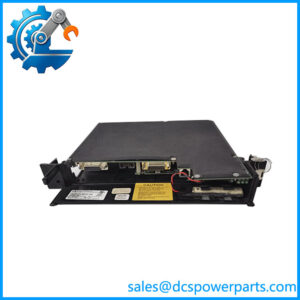
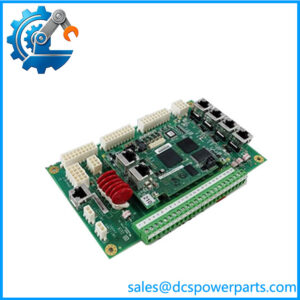
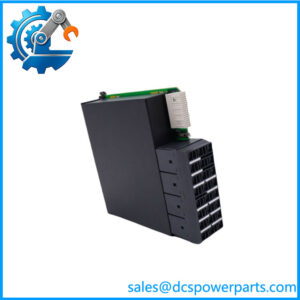
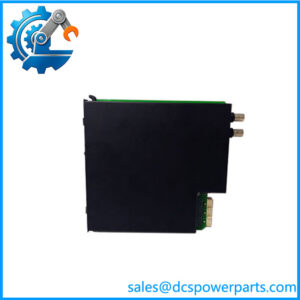
GE Multilin UR9AH / UR-9AH CPU Module
Key Technical Specifications
| Parameter | Specification |
|---|---|
| Manufacturer | GE Multilin |
| Model | UR-9AH |
| Series | Universal Relay |
| Module Type | CPU Module |
| Primary Role | Relay processing and protection/control logic |
| Installation | Dedicated CPU position in compatible UR relay |
| Configuration Software | EnerVista UR |
| Serial Interface | RS-485 reported for the 9AH configuration |
| Typical Protocols | Modbus RTU / DNP reported for applicable configuration |
| CT/VT Compatibility | Older UR CT/VT module generations must be checked |
| Application | Protection, control, metering, monitoring, and relay logic |
| Hardware Generation | Earlier UR CPU generation |
The is identified as a CPU module for GE Multilin Universal Relay systems. The UR family uses a modular architecture in which the CPU works with separate CT/VT, I/O, power supply, and communication modules. GE describes the broader UR platform as a modular protection and control system with programmable logic, metering, monitoring, communications, and expandable I/O.
Product Introduction
The GE Multilin is a CPU/processor module used in compatible Universal Relay protection platforms. Its job is to provide the computing resources and logic execution required by the relay, coordinating information from measurement and I/O modules and executing the configured protection and control functions. It occupies the CPU position within the UR relay architecture rather than operating as an independent field device.
For maintenance teams, the is particularly important when an older UR relay remains in service and the original processor has developed a hardware fault. Replacing the CPU is not simply a matter of matching the label. The relay model, installed CT/VT module generation, firmware, communication requirements, and existing protection settings all need to be considered before commissioning. A hardware mismatch can prevent the relay from starting correctly or generate a hardware/DSP mismatch condition.
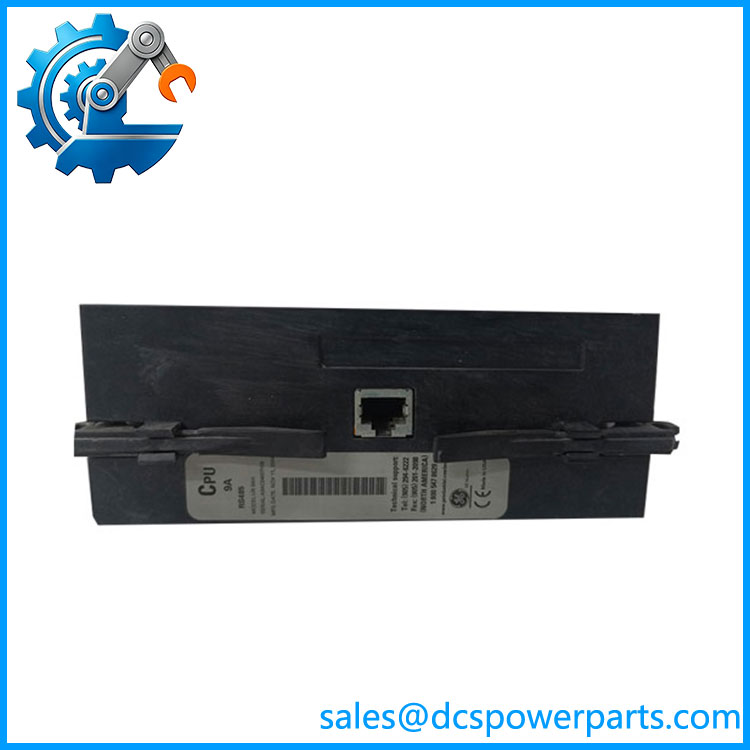
UR9AH
Application Scenarios & Field Pitfalls — The Engineer’s Perspective
Engineering Pain Point
A failed CPU in a protection relay can stop an otherwise healthy protection system from operating, even when the CT/VT, I/O, power supply, and field wiring remain serviceable. With legacy UR equipment, the bigger risk is installing a processor from the wrong hardware generation and discovering the incompatibility only during startup.
Typical Applications
- Feeder Protection: Used as the processing core in compatible UR feeder protection systems.
- Generator Protection: Supports processing and protection logic in compatible generator management relays.
- Transformer Protection: Provides the central processing function for applicable UR transformer protection configurations.
- Substation Automation: Coordinates protection logic, measurements, programmable control, monitoring, and relay communications.
Technical Pitfalls
- is a CPU, not a complete relay. The protection application depends on the host UR relay model and the other installed modules.
- CT/VT generation matters. Available technical references specifically warn that older CPU hardware must be matched with compatible older CT/VT module generations. Installing incompatible hardware can produce a DSP or hardware-mismatch condition.
- Do not assume all UR-9A variants are identical. UR-9AH, UR-9CH, UR-9DH, UR-9EH, UR-9GH, and later CPU generations have different hardware and communication characteristics.
- Communication claims require verification. Secondary references associate the 9AH configuration with RS-485 and protocols such as Modbus RTU/DNP, but the exact communication capability should be checked against the relay’s original ordering configuration and firmware rather than assumed from the CPU label.
- Firmware compatibility is a commissioning issue. Record the existing firmware revision and relay configuration before removing the failed CPU. A physically compatible processor can still require configuration or firmware work.
- Back up settings before replacement. Protection settings, FlexLogic, communications parameters, and programmable functions should be preserved whenever the existing relay can still be accessed.
- Perform protection testing after replacement. Do not return a replaced CPU directly to service based only on successful boot-up. Verify metering, inputs, outputs, protection elements, communications, event recording, and trip logic.
Related Products
- GE Multilin UR-9CH — Related UR CPU generation with different hardware characteristics.
- GE Multilin UR-9DH — Another UR Series CPU module.
- GE Multilin UR-9EH — Later CPU generation; compatibility must be checked before using as a replacement.
- GE Multilin UR-9GH — UR CPU with different communication configuration.
- GE Multilin UR-9HH — Later UR Series CPU module.
- GE Multilin UR-8AH — CT/VT module family that may be relevant when determining CPU compatibility.
- GE Multilin UR-8CH — CT/VT module used in compatible UR relay configurations.
- GE Multilin UR-8FH — Another UR CT/VT hardware generation.
- GE Multilin UR-RHV — UR Series power-supply module, functionally different from the CPU.
- GE Multilin UR-7GH — UR Series communication module, not a processor.
Procurement Note
For a replacement, provide the complete relay model, existing CPU part number, CT/VT module designation, firmware revision, and photographs of the module label whenever possible. The CPU should be treated as part of a specific UR hardware configuration, not as a universally interchangeable UR processor.
For legacy protection equipment, a tested original-generation CPU with verified compatibility can be preferable to an unverified later-generation substitute. After installation, perform a complete relay functional and protection test before placing the circuit back into normal service.