Description
Key Technical Specifications
| Parameter | Specification |
|---|---|
| Manufacturer | General Electric |
| Model | IS200TBCIH1CBD |
| Functional Board | TBCI Contact Input Terminal Board |
| Control Platform | Mark VI / Mark VIe |
| Number of Inputs | 24 contact inputs |
| Signal Type | Dry contact |
| H1 Excitation | 125 VDC nominal |
| Excitation Range | 100–145 VDC |
| Input Loading | 2.5 mA for first 21 circuits; 10 mA for last 3 |
| Hardware Input Filter | 4 ms |
| Terminal Blocks | 2 barrier-type blocks |
| Field Terminals | 48 terminal positions |
| Excitation Connectors | JE1 / JE2 |
| Controller/I/O Connectors | JR1 / JS1 / JT1 |
| Redundancy | Simplex / TMR |
| Terminal Board Power | Approx. 20.6 W |
| Operating Temperature | Approximately 0–60°C per original TBCI specification |
| Storage Temperature | -40 to +85°C |
| Board Size | Approximately 33.02 × 10.16 cm |
GE documentation distinguishes three TBCI excitation versions: TBCIH1C = 125 VDC, TBCIH2C = 24 VDC, and TBCIH3C = 48 VDC. That distinction is critical when selecting a replacement; these suffixes should not be treated as cosmetic variations.
Product Introduction
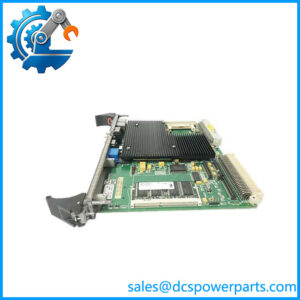
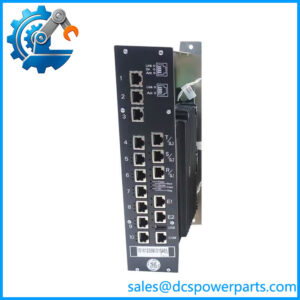
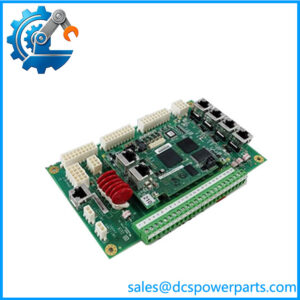
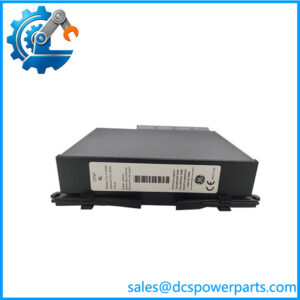
The GE IS200TBCIH1CBD is a 24-channel contact input terminal board used to terminate discrete field signals in Mark VI turbine control systems. It provides the physical interface for dry contacts such as switches, relay contacts, limit switches, and turbine status/interlock signals before those signals are passed into the controller’s I/O processing architecture. The board includes input filtering and contact excitation circuitry.
The H1 configuration is specifically designed around 125 VDC floating contact excitation. In Mark VI systems, the terminal board connects to VME-based controller/I/O hardware through the appropriate connectors; in Mark VIe arrangements, the TBCI can interface directly with PDIA I/O packs. GE states that the C-version TBCI is required in Mark VIe for correct mechanical alignment of connector JT1 with the I/O pack support.
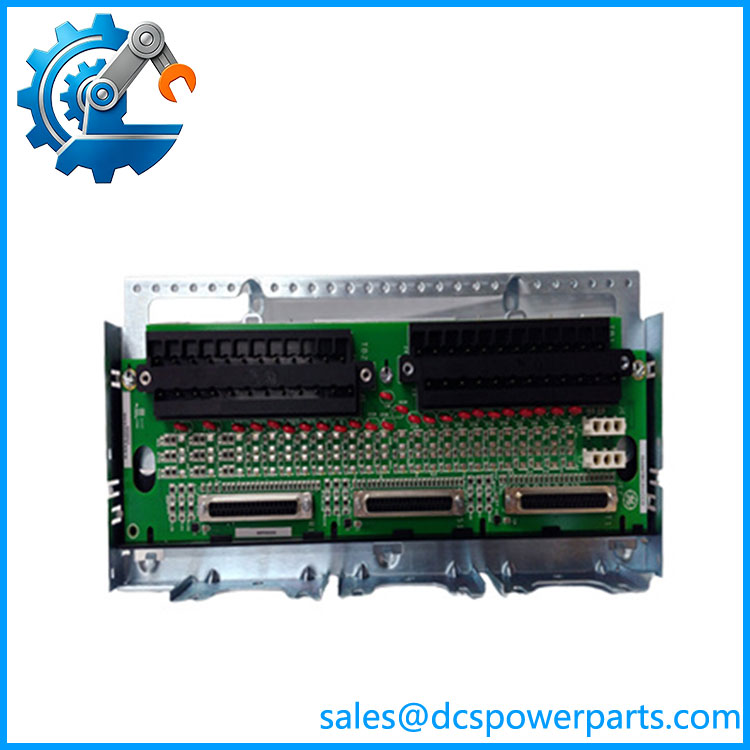
IS200TBCIH1CBD
Engineering Pain Point
The biggest field mistake is ordering IS200TBCIH1CBD based only on the words “contact input board.” The H1 designation determines the contact excitation voltage. Installing an H2 or H3 variant into a system designed around the 125 VDC H1 circuit can produce an electrically incompatible installation even when the boards appear similar and have the same basic 24-channel function.
Typical Applications
- Gas turbine control: Discrete status and interlock acquisition in GE Mark VI systems.
- Steam turbine control: Contact monitoring for permissives, trips, limit switches, and equipment status.
- TMR turbine control: Distribution of contact signals to redundant processing paths.
- Mark VIe discrete input systems: TBCI termination with appropriate PDIA I/O packs.
Technical Pitfalls to Avoid
- Verify the H1 voltage.
H1 means 125 VDC nominal, with a documented 100–145 VDC floating range. Do not substitute H2 or H3 without an engineering review. - Do not confuse the terminal board with the I/O processor.
The TBCI performs field termination and signal interface functions. The actual signal processing is handled by the associated Mark VI/Mark VIe I/O hardware. - Check the redundancy arrangement before disconnecting cables.
JR1 is used in simplex arrangements, while JS1/JT1 and the corresponding cabling are involved when redundant architectures are configured. - Record the complete part number.
IS200TBCIH1CBD contains more information than the generic “TBCI” designation. The H1 group identifies the excitation class, while the complete suffix should be retained when ordering a replacement. - Inspect the terminal blocks and connectors during replacement.
A defective JR1/JS1/JT1 connection, loose field terminal, or damaged connector can produce symptoms that resemble a failed terminal board. Check wiring and connector seating before condemning the PCB. - Verify the installed Mark VI versus Mark VIe architecture.
The TBCI family spans both platforms, but the associated I/O hardware and mechanical requirements are not identical. GE specifically documents the C-version requirement for proper Mark VIe I/O-pack alignment.
Related Products
- GE IS200TBCIH1C — TBCI contact input terminal board in the same H1/125 VDC functional family.
- GE IS200TBCIH2C — 24 VDC H2 version; same general TBCI function but different contact excitation voltage.
- GE IS200TBCIH3C — 48 VDC H3 version; not electrically equivalent to H1.
- GE IS200TBCIH1B — Earlier B-version H1 TBCI hardware; functional equivalence should be checked against the installed system revision.
- GE PDIA I/O Pack — Mark VIe discrete input processing hardware used with TBCI terminal boards.
- GE VCCC / VCRC — Mark VI controller/interface hardware associated with TBCI connections in legacy Mark VI architectures.
Procurement note: Specify the complete IS200TBCIH1CBD designation, not simply “GE TBCI.” Before installation, verify the 125 VDC contact-excitation system, Mark VI/Mark VIe architecture, redundancy configuration, connector arrangement, and board revision against the existing hardware and control-system drawings.