Description
GE Fanuc IC660EBD020X | 16-Point 24/48 VDC Genius I/O | Legacy PLC Spare
Key Technical Specifications
| Parameter | Specification |
|---|---|
| Manufacturer | GE Fanuc |
| Model | IC660EBD020X |
| Product Family | Genius I/O |
| Product Type | Electronic Assembly / Discrete I/O Block |
| Circuit Count | 16 |
| I/O Type | Discrete source/sink |
| Nominal Field Voltage | 24/48 VDC |
| Operating Supply Range | 18–56 VDC |
| Input Filter | Selectable 5–100 ms |
| Output Current | Up to 2 A per circuit |
| Maximum Output Inrush | 10 A for up to 10 ms |
| Maximum Total Output Current | 15 A at 35°C |
| Block Isolation | 1,500 V |
| Power Consumption | 150 mA typical / 300 mA maximum |
| Operating Temperature | 0°C to +60°C |
| Storage Temperature | -40°C to +100°C |
| Humidity | 5–95%, non-condensing |
| Communication Architecture | Genius I/O |
| Compatible Terminal Assembly | IC660TSD020 family |
The IC660EBD020 family is described as a 16-circuit source/sink input and output block for the Genius I/O system. The 24/48 VDC version is intended for compatible DC field sensors and actuators, with selectable input filtering and circuit-level diagnostics. Published technical information also identifies 1,500 V block isolation and a 150 mA typical / 300 mA maximum block power requirement.
Product Introduction
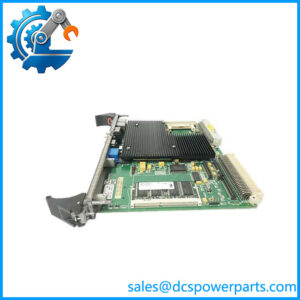
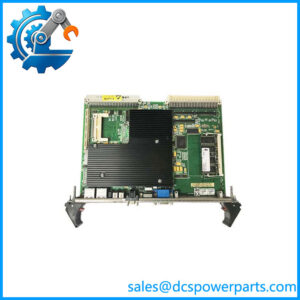
The is a legacy Genius I/O electronic assembly used for distributed 24/48 VDC discrete field I/O. It provides 16 configurable circuits for signal acquisition and field-device control while communicating with the host PLC through the Genius I/O architecture. Unlike a conventional rack-mounted Series 90 I/O card, the Genius Block is installed as a distributed field node, placing I/O closer to sensors and actuators.
For maintenance teams, the is particularly relevant when an existing Genius installation must remain operational without redesigning the control architecture. The electronic assembly is associated with a separate terminal assembly, so replacement should be based on the complete block configuration rather than the catalog number alone. Public technical references identify the IC660TSD020 as the applicable terminal assembly for the IC660EBD020 family.
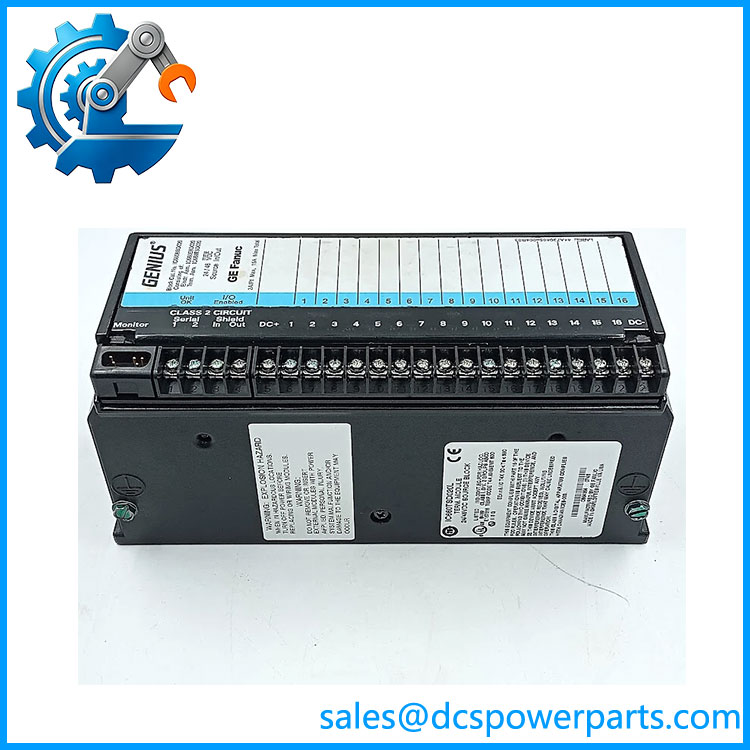
IC660EBD020X
Application Scenarios & Field Pitfalls — The Engineer’s Perspective
Engineering Pain Point
A failed Genius Block does not always mean the electronic assembly itself has failed. Loss of field power, damaged terminal wiring, incorrect block configuration, Genius bus communication problems, or a mismatch between electronics revision and terminal hardware can produce similar symptoms. This is why the should be evaluated as part of the complete Genius I/O node.
Typical Applications
1. Distributed discrete I/O
The provides 16 discrete circuits for remote field signal acquisition and actuator control within a Genius I/O network.
2. 24/48 VDC field instrumentation
The block is designed for compatible 24/48 VDC discrete field devices, including electromechanical and solid-state devices.
3. Remote actuator control
Its source-type output capability allows compatible field loads to be controlled directly, subject to the per-circuit and total-current limitations.
4. Legacy GE Fanuc PLC systems
It is suitable for plants maintaining older GE Fanuc Genius distributed-I/O installations where replacing the entire PLC architecture would introduce unnecessary engineering and commissioning work.
Technical Pitfalls
1. Verify the complete catalog number.
IC660EBD020 has existed across numerous electronics revisions. The final letter identifies the revision, and published documentation specifically warns that later revisions can use a newer electronic housing and may have terminal-strip compatibility considerations.
2. Do not confuse the electronics assembly with the terminal assembly.
The is the electronic portion of the Genius Block. A replacement listing that does not include the terminal hardware should not be assumed to be a complete field-ready block. The IC660TSD020 is identified with this family.
3. Check the field voltage before installation.
This is the 24/48 VDC source-block family. Do not substitute another Genius block simply because it has the same 16-circuit architecture.
4. Observe total output loading.
The published 2 A figure applies to an individual circuit; it does not mean that all 16 outputs can simultaneously operate at 2 A. The documented total output-current limitation must also be considered.
5. Check Genius bus configuration.
If local circuit LEDs and field measurements appear normal but the PLC does not recognize the block, investigate the Genius bus address, communication wiring, bus controller, network configuration, and block configuration before condemning the electronics.
6. Inspect used hardware carefully.
For refurbished or surplus units, inspect terminal interfaces, enclosure condition, circuit LEDs, signs of overheating, corrosion, contamination, and evidence of field overvoltage. Genius Blocks installed in older control cabinets can show age-related deterioration even when the electronics initially power up normally.
Related Products
- GE Fanuc IC660EBD020 — base catalog designation for the 24/48 VDC Genius source-block electronics family.
- GE Fanuc IC660TSD020 — associated terminal assembly for the IC660EBD020 family.
- GE Fanuc IC660BBD020 — corresponding Genius Block assembly designation.
- GE Fanuc IC660HHM501 — Genius Hand-Held Monitor used for configuration and diagnostics.
- GE Fanuc IC660HHM500 — earlier Genius configuration/diagnostic handheld device.
- GE Fanuc IC660EBD024 — related Genius discrete I/O electronics with a different voltage/circuit configuration.
- GE Fanuc IC660BBD024 — related Genius discrete I/O block family.
- GE Fanuc IC670PBI001 — PROFIBUS interface unit used in related GE distributed-I/O architectures.
- GE Fanuc IC670MDL930 — Genius Field Control discrete output module family.
- GE Fanuc IC670MDL740 — related 12/24 VDC discrete output module family.
Procurement Note
When sourcing a , match the complete part number and revision, not simply “IC660EBD020.” Confirm the installed terminal assembly, field-voltage configuration, Genius bus architecture, and existing block configuration before approving a replacement.
The revision suffix deserves particular attention. Public technical documentation lists numerous revisions and specifically notes mechanical compatibility considerations for later electronic housings.
For a plant that still depends on Genius I/O, retaining a tested spare can be more practical than redesigning a functioning distributed-I/O section solely because the hardware is old. For replacement procurement, however, the correct approach is to verify the installed revision and terminal hardware first, then test the replacement against the intended field configuration before returning the node to service.
Engineering classification: GE Fanuc — 16-circuit 24/48 VDC Genius I/O electronic assembly for distributed discrete field I/O.