Description
Product Introduction
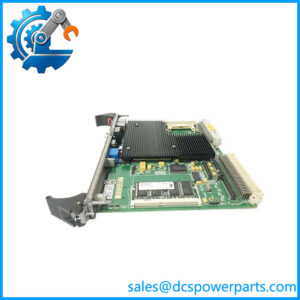
When turbine feedback signals are scaled incorrectly or an interface board develops a fault, speed, fuel-flow, servo, and generator-feedback measurements may become unreliable. The GE DS200TCQCG1AJD is associated with the Mark V TCQC board family, which handles signal conditioning and interface functions within the turbine control architecture.
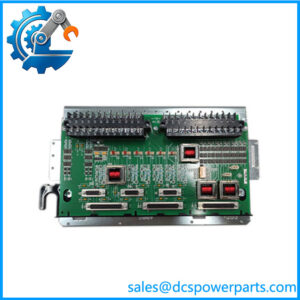
The TCQC board processes selected current-loop and pulse-rate signals, supports LVDT/LVDR excitation functions, and interfaces with related Mark V boards. For a replacement, verify the complete suffix, board revision, jumper positions, and installed system configuration rather than relying on the base model number alone.
Key Technical Specifications
| Parameter | Specification |
|---|---|
| Model | DS200TCQCG1AJD |
| Manufacturer | General Electric |
| Control platform | Mark V Speedtronic |
| Board designation | TCQC |
| Product type | Analog I/O expander / RST overflow board |
| Signal processing | Analog signal scaling and conditioning |
| Input signal types | Selected mA current-loop and pulse-rate signals |
| Sensor-related function | LVDT/LVDR excitation support |
| Servo interface | Configurable servo output-current and feedback scaling |
| Configuration | Hardware jumpers |
| Jumper count | 24 reported for the TCQC family; confirm against the exact board revision |
| Connector arrangement | Published TCQC-family descriptions list three 40-pin, three 34-pin, and one 16-pin connector |
| Board communication | Internal Mark V board-to-board connections |
| Standalone Ethernet | Not established by the available documentation |
| Supply voltage | Confirm from the applicable GE manual and cabinet design |
| Operating temperature | Confirm from the applicable hardware documentation |
| Mounting | Installed within the compatible Mark V control assembly |
| Lifecycle | Legacy hardware; verify current availability and condition |
Specification note: The available technical descriptions are primarily for the DS200TCQCG1A family and related TCQC variants. They do not conclusively establish every electrical rating or revision detail for the exact DS200TCQCG1AJD suffix. Confirm these details against the board label and applicable GE documentation before procurement.
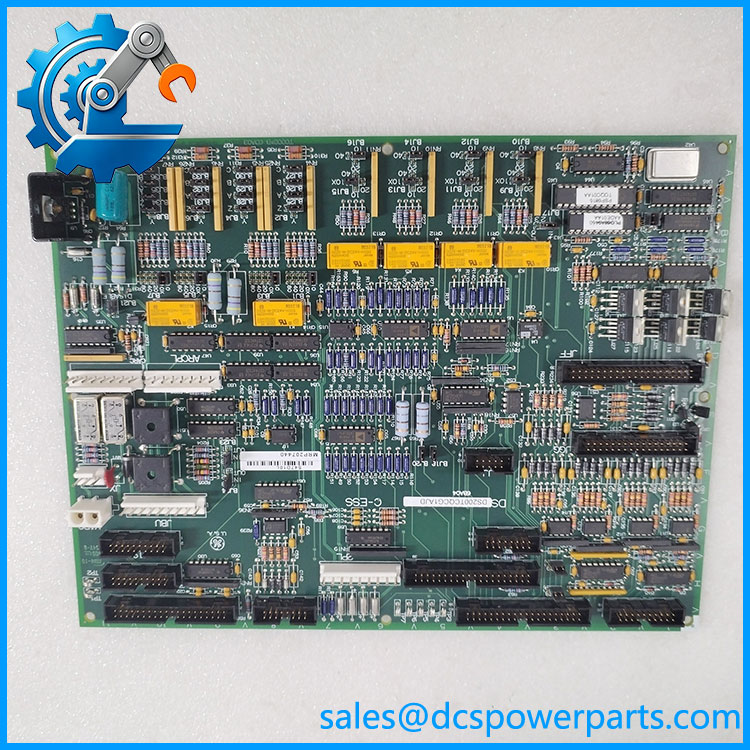
DS200TCQCG1AJD
Application Scenarios and Pain Points
Incorrect signal scaling or a faulty feedback path can produce misleading turbine readings, control deviations, and unnecessary component replacements. The TCQC board is relevant when troubleshooting the corresponding functions in a compatible Mark V system.
- Turbine instrumentation: Conditions selected analog signals used by the turbine control system.
- Servo-valve control: Provides configured signal-scaling functions associated with servo outputs and feedback.
- Speed and flow monitoring: Processes designated pulse-rate signals and selected current inputs.
- Generator and line feedback: Interfaces with related control boards handling generator and line measurements.
- Legacy control maintenance: Supports repair of existing Mark V installations where the original TCQC configuration must be retained.
Field note: Before replacing a TCQC board, compare the installed jumper positions with the original configuration. A board that powers up can still produce incorrect signal scaling if its hardware settings do not match the application.
Related Products
The following board designations appear in the TCQC signal-processing architecture. Their functions differ, and they should not be treated as interchangeable parts.
- DS200TCQCG1A — Base TCQC analog I/O expander family designation.
- DS200TCQCG1BJF — Related TCQC variant with a different revision combination.
- DS200TCQA — TCQA analog I/O board family involved in signal processing and exchange with the TCQC.
- DS200TCQE — Related Mark V board associated with selected pulse-rate signal paths.
- DS200STCA — Interface board associated with generator/line feedback and selected conditioned signals.
- TBQB terminal board — Source of certain current-loop and pulse-rate signals in documented configurations.
- QTBA terminal board — Provides additional signal connections in certain Mark V configurations.
Confirm the full part number and system drawing for every related component before ordering or planning a substitution.
Engineer’s Guide: Replacement Checks
1. Match the full part number and revision.
Warning: The base DS200TCQCG1A designation does not by itself confirm that a board with suffix JD has the same revision and configuration as another TCQC variant. Compare the complete nameplate and board markings.
2. Preserve hardware jumper settings.
Record jumper positions before removal. TCQC jumpers can affect servo output-current range and feedback scaling; incorrect settings can alter the control signal delivered to connected equipment. Use the approved configuration for the specific turbine application.
3. Check the entire signal path.
Inspect connectors, cables, terminal-board wiring, and related TCQA/TCQE/STCA functions before concluding that the TCQC itself has failed. Confirm the fault with the plant’s diagnostic procedure and approved test equipment.
For used or refurbished stock, request actual board photographs, revision information, inspection or functional-test results, and written warranty terms. Confirm whether the board has been repaired or had components replaced.
Frequently Asked Questions
Q1. What is the GE DS200TCQCG1AJD used for?
It is identified with the GE Mark V TCQC analog I/O expander family. The board performs selected signal-conditioning, scaling, and interface functions in turbine-control applications.
Q2. Is DS200TCQCG1AJD the same as DS200TCQCG1A?
The model numbers are related, but the full suffix may identify a specific configuration or revision. Do not assume interchangeability without checking the hardware markings and applicable GE documentation.
Q3. Does the TCQC board directly connect to Ethernet?
The available documentation describes internal Mark V board and cable interfaces. It does not establish a standalone Ethernet interface for this board.
Q4. Why are the jumper positions important?
The jumpers configure selected servo output-current and feedback scaling functions, along with other board settings. Incorrect positions can cause signal mismatches even when the board appears operational.
Q5. Can I replace it with another TCQC board revision?
Only after confirming the full part number, revision compatibility, connector arrangement, jumper settings, and application requirements. A shared TCQC designation is not sufficient proof of a direct replacement.
Q6. What should I request when buying a refurbished board?
Ask for clear photographs of the front and back, the complete part number, revision details, functional-test evidence, repair history if applicable, warranty coverage, and dispatch lead time.
Q7. What information helps diagnose a suspected TCQC failure?
Record the relevant alarms, affected analog or pulse-rate signals, measured values, connector condition, and jumper configuration. Compare these findings with the approved Mark V drawings and troubleshooting procedures before replacing the board.