Description
Key Technical Specifications
| Parameter | Specification |
|---|---|
| Model | DL-1200/RTU |
| Product Family | DL-1200 Series |
| Product Type | Card-Type Power-Line Modem |
| Primary Application | RTU communication |
| Transmission Speed | 1200 BPS |
| Communication Medium | Dedicated power/utility communication line |
| RTU Compatibility | Harris RTU compatibility identified in technical documentation |
| Form Factor | Plug-in/card type |
| Application Area | Power utility SCADA / remote terminal communication |
| Communication Architecture | Dedicated-line modem connection |
| Related Model | DL-1200/1RTU |
| Configuration | Application-dependent |
| Condition | New Surplus / Refurbished, subject to inventory |
The available DL-series documentation explicitly distinguishes DL-1200/RTU and DL-1200/1RTU as 1200 BPS card-type dedicated-line power modems, with the latter also identified as RTU-compatible. The same documentation separately lists DL-1200/AC, DL-1200/DC, and DL-1200/RACK, confirming that these are different physical configurations rather than interchangeable names.
Application Scenarios & Pain Points
The main field issue with this equipment is age. A 1200-baud communications link may look painfully slow by modern standards, yet if it is carrying the only telemetry path from a remote electrical installation, replacing it with the wrong “modern RTU” does not solve the problem.
- Substation SCADA: Suitable for legacy utility installations where an RTU communicates over a dedicated power-line circuit.
- Remote electrical facilities: The low-speed modem architecture fits older remote monitoring systems where bandwidth requirements are modest but long-distance communication is essential.
- Harris RTU installations: The documentation specifically identifies the RTU version as compatible with Harris equipment.
- Legacy communication maintenance: Useful as an exact replacement where the existing system still depends on the DL-1200 communication architecture.
Brief Field Case
A remote substation may show normal RTU operation locally while the control center reports a complete loss of telemetry. Before replacing the RTU, check the modem carrier, line interface, termination, and communication path. With a 1200 BPS dedicated-line system, a small interface fault can make the entire remote station appear offline.
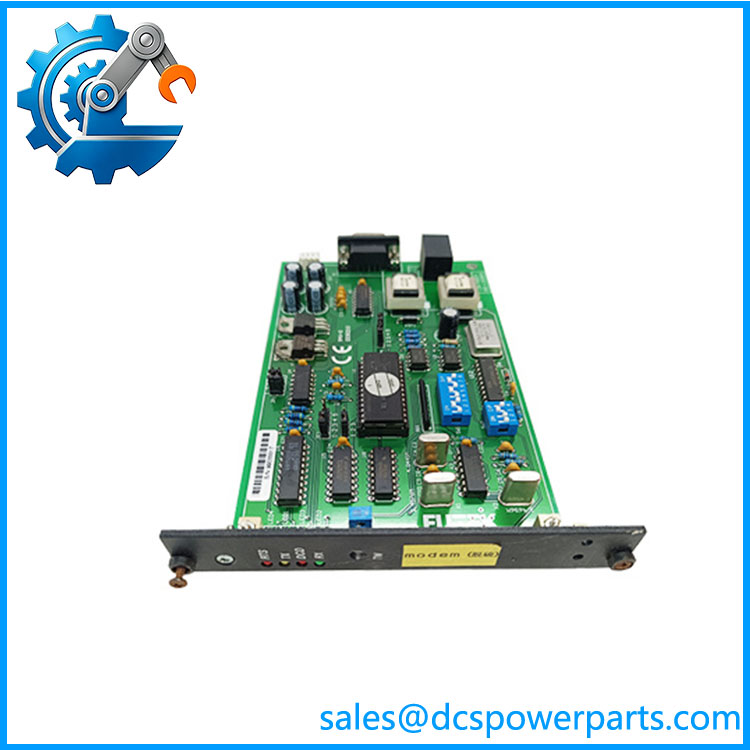
DL-1200
Related Products
- DL-1200/RTU — Subject model; card-type 1200 BPS dedicated-line power modem intended for RTU applications.
- DL-1200/1RTU — Closely related RTU modem variant. The documentation identifies it as a 1200 BPS dedicated-line modem compatible with Harris RTU equipment.
- DL-1200/AC — Desktop 1200 BPS dedicated-line power modem using AC power. It has a different physical format from the RTU card.
- DL-1200/DC — Desktop 1200 BPS dedicated-line modem using DC power. Relevant where a standalone modem rather than an RTU card is required.
- DL-1200/RACK — Rack-mounted 1200 BPS dedicated-line modem configuration supporting AC/DC power and multi-port arrangements. It is intended for centralized installations rather than a single RTU card position.
- DL-1200/1T — Smart synchronous/asynchronous conversion channel board. It performs a different interface-conversion function and should not replace the RTU modem without a documented system redesign.
- DL-1200/2T — Digital isolated synchronous/asynchronous conversion channel board. Useful for signal isolation/conversion rather than the primary modem function.
- DL-1200/3T — Smart selectable analog/digital synchronous/asynchronous conversion channel board. It is an interface-conversion component rather than an RTU modem.
- DL-9600/1 — Later 1200 BPS intelligent dedicated-line FSK power modem in the same broader communications family. Its feature set and hardware architecture differ from DL-1200/RTU, so substitution requires system-level verification.
The Engineer’s Guide: Field Pitfalls to Avoid
WARNING 1 — Do not confuse this with a modern GE DL-1200 RTU.
Several current product listings describe “DL-1200/RTU” as a large-I/O GE RTU with Ethernet, DNP3, IEC 60870, and modern SCADA interfaces. Those descriptions conflict with the older DL-1200 documentation, which identifies DL-1200/RTU as a 1200 BPS card-type dedicated-line power modem.
How to avoid it: Match the actual installed card, connector arrangement, equipment manufacturer, and system documentation before purchasing.
WARNING 2 — Do not substitute DL-1200/AC or DL-1200/DC simply because the model prefix matches.
The DL-1200 family contains different physical configurations: RTU card, AC desktop, DC desktop, rack-mounted, and interface-conversion variants.
How to avoid it: Confirm the exact suffix /RTU and the physical mounting arrangement.
WARNING 3 — Do not judge compatibility by baud rate alone.
Two modems operating at 1200 BPS can still use different line interfaces, signaling methods, power arrangements, or host connections.
How to avoid it: Before replacement, record the existing modem’s wiring, line interface, host RTU model, communication settings, and alarm behavior.
Frequently Asked Questions (FAQ)
What is the DL-1200/RTU?
The DL-1200/RTU is a 1200 BPS card-type dedicated-line power modem intended for RTU communication. Available technical documentation specifically identifies it as an RTU-compatible version of the DL-1200 modem family.
It should not automatically be classified as a modern standalone RTU controller.
Is DL-1200/RTU an Ethernet RTU?
No—not according to the older technical documentation associated with the DL-1200 family. The documented DL-1200/RTU is a 1200 BPS dedicated-line power modem.
Several current listings describe a completely different, modernized product under the same name, so procurement teams should be particularly careful with this model.
What is the communication speed of DL-1200/RTU?
The documented transmission speed is 1200 BPS.
That low rate is appropriate for legacy telemetry and control applications where the data volume is relatively small. It is not comparable to Ethernet-based SCADA bandwidth.
Is DL-1200/RTU compatible with Harris RTU equipment?
The DL-series documentation identifies the DL-1200/RTU and DL-1200/1RTU as dedicated-line modem configurations compatible with Harris RTU equipment.
For an actual replacement, confirm the Harris RTU model and the existing interface wiring before installation.
What is the difference between DL-1200/RTU and DL-1200/RACK?
DL-1200/RTU is the card-type configuration intended for RTU applications. DL-1200/RACK is a rack-mounted modem arrangement designed for centralized installations and can support multiple ports.
They should not be treated as mechanically interchangeable.
Can I replace DL-1200/RTU with DL-9600/1?
Not automatically. Both belong to the broader dedicated-line power-modem category and can operate at 1200 BPS, but they are different hardware generations and configurations. The communication line interface, host connection, and system requirements must be checked before substitution.
What should I request when buying a replacement DL-1200/RTU?
For an obsolete utility communication component, request:
- Exact DL-1200/RTU identification.
- Manufacturer and complete nameplate photograph.
- Front/rear photographs.
- Connector and terminal arrangement.
- Host RTU compatibility confirmation.
- 1200 BPS communication test.
- Line-interface test.
- Power-up test.
- Carrier/transmit/receive verification where applicable.
- Condition statement.
- Warranty and return terms.
For this part, a simple power-on test is not sufficient. The meaningful acceptance test is communication through the same type of dedicated line and host RTU interface used by the installed system.