Description
Key Technical Specifications
| Parameter | Value |
|---|---|
| Manufacturer | General Electric |
| Product Family | GE 531X |
| Control Platform | Mark V Speedtronic |
| Part Number | 531X306LCCBAG3 |
| Product Type | LAN Communication Card |
| Board Function | LAN communication / control-system networking |
| Hardware Family | LCC |
| Revision / Configuration | BAG3 |
| Application | Turbine control / industrial drive control |
| System Architecture | GE Mark V |
| Communication Function | Mark V LAN communications |
| External Interface | Verify installed system hardware and connector configuration |
| Network Protocol | Mark V-specific; verify system documentation |
| Power Input | Supplied by host system; verify cabinet drawings |
| Firmware | Board/system dependent |
| Installation | Internal Mark V control cabinet |
| Mounting | 531X-series control-board assembly |
| Environmental Rating | Verify exact hardware revision |
| Replacement Requirement | Match complete board number and Mark V system configuration |
Specification caution
There is a lot of poor information circulating about this board. One listing calls it a Series 90-20 PLC LAN card, while multiple independent records identify the same 531X306LCCBAG3 as a GE Mark V LAN communication card. The Mark V identification is much better supported.
I would not treat claims of generic Ethernet, PROFINET, Modbus, 24 VDC, or 120 VAC operation as verified specifications for this particular board. Those claims appear in low-quality secondary listings and are not adequate for an engineering replacement decision.
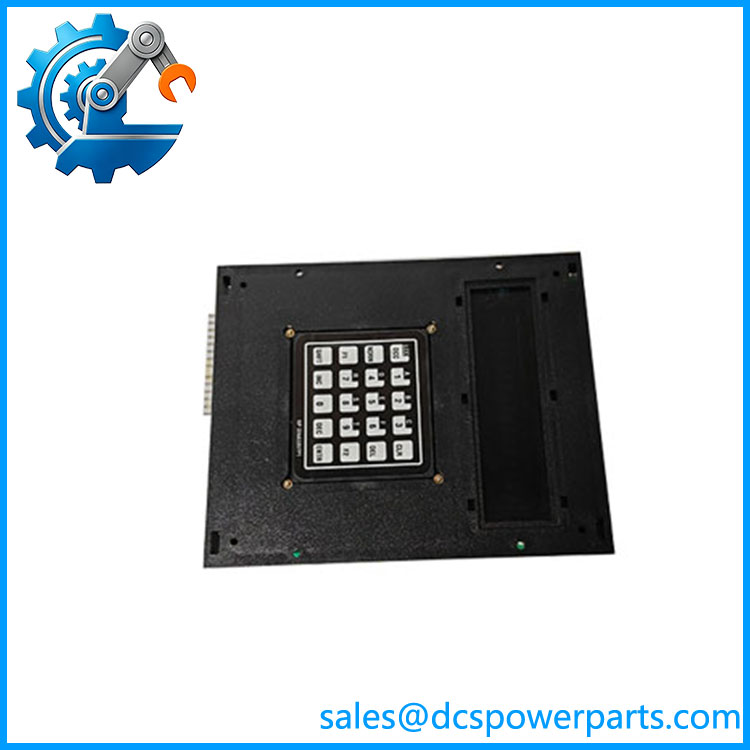
531X306LCCBAG3
Product Introduction
GE 531X306LCCBAG3
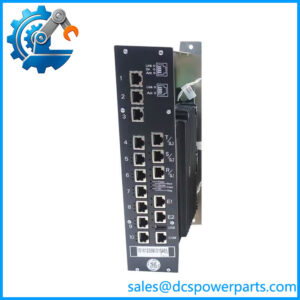
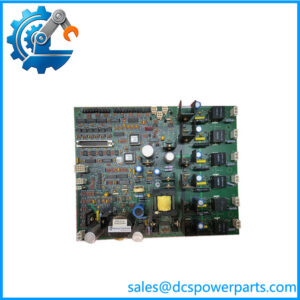
The GE 531X306LCCBAG3 is a LAN communication card used in legacy GE Mark V Speedtronic turbine control systems. It belongs to the 531X board family and provides communication functionality required for networking within the Mark V control architecture.
This is not a generic Ethernet adapter. That distinction matters. The card is part of an older proprietary turbine-control architecture, so its compatibility depends on the Mark V cabinet, associated control boards, firmware, and network configuration. A visually similar 531X LCC variant should not be assumed to be interchangeable.
Application Scenarios & Field Pitfalls
Engineering Pain Point
A Mark V turbine can continue running while communication to another control node, operator interface, or supervisory system begins failing. Engineers often replace the network cable or downstream equipment first. On an old Mark V installation, the LCC board itself, its connectors, power supply, or the associated LAN hardware can be the actual failure point.
Typical Applications
- Gas Turbines — Mark V turbine control communication between control processors, operator interfaces, and associated turbine-control equipment.
- Steam Turbines — Legacy Speedtronic control-system networking for turbine monitoring and control functions.
- Power Generation Plants — Communication between Mark V control cabinets and supervisory/operator equipment.
- Industrial Drive Systems — 531X-series control architectures where LAN communication hardware is used for system-level data exchange.
Technical Pitfalls to Avoid
- Do not mistake the LCC board for a standard Ethernet card.
The 531X306LCCBAG3 is identified specifically as a Mark V LAN communication card. Generic network-card specifications are not sufficient for replacement. - Match the complete part number.
GE has multiple closely related LCC boards, including 531X306LCCBCG3, 531X306LCCBDG3, 531X306LCCBEG3, and 531X306LCCBLG3. Similar numbering does not establish drop-in compatibility. - Check the Mark V system architecture first.
Before replacing an LCC, identify the cabinet, control processor arrangement, associated LAN I/O boards, and network topology. The card should be evaluated as part of that architecture. - Do not assume a communication failure means the board has failed.
Check the board’s power, connectors, network cabling, termination, and the corresponding node equipment. Intermittent communication problems are particularly easy to misdiagnose. - Inspect aging connectors.
These boards are now used in legacy equipment. Oxidation, contamination, loose connectors, and mechanical stress can produce intermittent network faults. - Check adjacent 531X hardware.
The LCC communicates with other control hardware. A failure in an associated control or LAN interface board can appear to be an LCC problem. - Preserve the original board configuration.
If the board contains configurable hardware settings, record the original jumper, switch, or configuration positions before removal. Do not assume the replacement arrives configured identically. - Do not apply generic voltage information.
Public listings contain contradictory power specifications for this part. The board’s actual supply should be established from the Mark V cabinet drawings and GE documentation. - Check for obsolescence before planning a long-term repair strategy.
The 531X/Mark V hardware is a legacy platform. Keeping a tested spare LCC on the shelf is often more practical than trying to source one after a turbine outage has already started. - Verify the communication path end-to-end.
After replacement, check the physical link, node communication, operator-interface data, alarms, and any dependent supervisory functions. A card-level indication alone is not enough.
Related Products
- GE 531X306LCCBCG3 — Related 531X LAN communication card. It serves the same broad LCC function but has a different hardware configuration. Do not substitute it for BAG3 without documented compatibility.
- GE 531X306LCCBDG3 — Another LCC variant in the same 531X family. GE spare-parts records identify it as a LAN communication card and note a later supersession relationship.
- GE 531X306LCCBEG3 — Related LAN communication card with a different configuration/supersession history. It may be relevant when investigating replacement options for older Mark V systems, but exact compatibility must be confirmed.
- GE 531X306LCCBLG3 — Another LCC-family communication card appearing in GE 531X spare-part records. It should be treated as a separate hardware configuration until documented otherwise.
- GE 531X307LTBAJG1 — LAN I/O terminal board used in the broader 531X/Mark V hardware family. It provides an I/O termination/interface function and is not a substitute for the LCC communication card.
- GE 531X301DCCAFG2 — Main drive/control board from the 531X family. It handles control functions rather than serving as the LAN communication card.
- GE 531X302DCIABG3 — DC instrumentation card in the 531X family. It performs signal/instrumentation functions rather than LAN communication.
- GE 531X303MCPARG2 — AC2000 power/interface card. It belongs to the same broad 531X spare-parts ecosystem but performs a power/control-interface role rather than LAN communication.
- GE 531X308PCSADG1 — Power connection board. It supports power distribution/interface functions and should not be confused with the communication PCB.
- GE 531X309SPCAJG1 — Signal-processing board in the 531X family. It handles signal-processing functions and is complementary to the communication architecture rather than a direct LCC replacement.