Description
G.M. International D5072D SIL 2 Multifunction Temperature Converter
Product Introduction
Temperature signals coming from hazardous areas often need more than simple signal scaling. G.M. International D5072D is a two-channel D5000 Series temperature signal converter designed to accept low-level signals from thermocouples, millivolt sources, RTDs, resistance sensors, or transmitting potentiometers and transfer the conditioned signal to the safe-area control system through galvanic isolation. G.M. International specifies the unit for SIL 2 safety-related applications.
The D5072D is programmable rather than being locked to one sensor/output combination. Its functions include signal scaling, inversion, output duplication, fault monitoring, configurable cold-junction compensation, and Modbus RTU RS-485 monitoring/configuration. For plant procurement, the distinction between the base D5072D and suffix variants such as D5072D-087, D5072D-096, and is important because these variants can represent different configured functions.
Key Technical Specifications
| Parameter | Specification |
|---|---|
| Product Model | |
| Manufacturer | G.M. International S.p.A. |
| Product Series | D5000 |
| Product Type | SIL 2 multifunction temperature signal converter |
| Number of Channels | 2 |
| Input Signal | mV, thermocouple, resistance/RTD, transmitting potentiometer |
| RTD Configuration | 2-, 3-, or 4-wire |
| Hazardous-Area Input | Zone 0 / Division 1 applications |
| Installation Area | Zone 2 / Division 2 or safe area, according to installation/certification requirements |
| Output | Programmable current output |
| Typical Output Range | 0/4–20 mA |
| Output Range Capability | 0–24 mA |
| Output Direction | Direct or reverse |
| Isolation | Three-port galvanic isolation |
| Communication | Modbus RTU RS-485 |
| Cold-Junction Compensation | Internal, fixed, or remote |
| CJC Sensor | Internal PT1000 or external RTD |
| Fastest Integration Time | 50 ms |
| Alarm Function | Programmable alarm via photoMOS / termination interface |
| Fault Monitoring | Sensor, burnout, internal and CJC fault monitoring |
| Mounting | DIN rail / termination board |
| Supply | 24 VDC nominal system supply |
| Safety Integrity | SIL 2 |
| Maximum Associated Voltage | 250 Vrms Um |
| Approx. Weight | 135 g |
G.M. International’s documentation identifies the as a two-channel unit and specifies the mV, thermocouple, resistance/RTD and potentiometer input capability, programmable output functions, RS-485 Modbus communication, and three-port isolation. A separate technical listing specifies an 18–30 VDC rated operational supply range, -40 to +70°C operating temperature, IP20 enclosure rating, and SIL 2 certification; these values should be checked against the exact certification/configuration required for the installation.
Application Scenarios & Pain Points
Hazardous-Area Temperature Measurement
The is intended for temperature signals originating from hazardous locations. Its input architecture accommodates thermocouples, millivolt sources, RTDs, resistance sensors, and transmitting potentiometers, making it useful where the field sensor type varies between process applications.
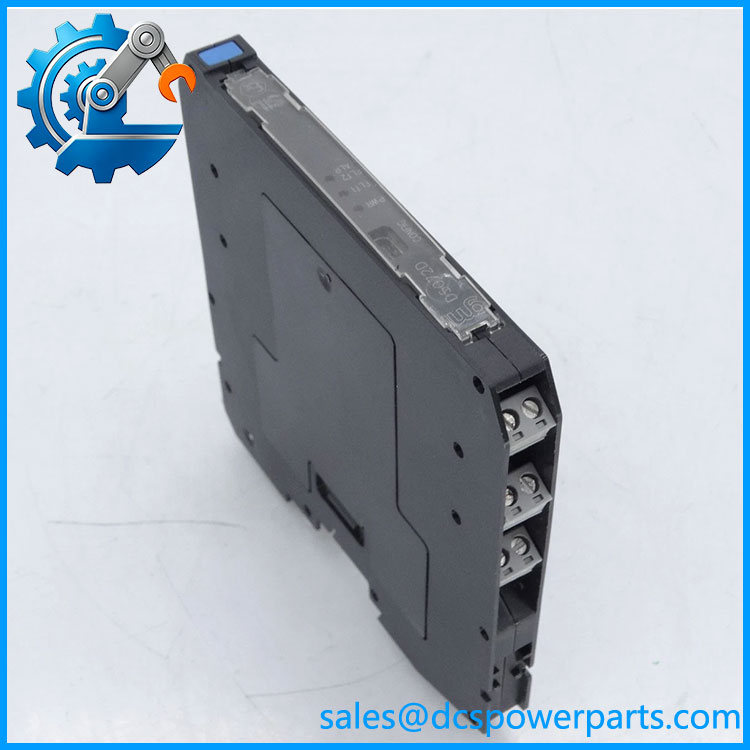
D5072D
Safety Instrumented Systems
The device is documented for SIL 2 safety-related applications. That makes the certification and complete loop architecture more important than simply confirming that the module produces a 4–20 mA signal. Sensor, logic solver, wiring, proof-test procedures, and final element requirements still have to be assessed as a complete safety function.
Temperature Signal Duplication
One useful function is signal duplication. A single input can be configured to produce two independent outputs. The documentation also describes adder, subtractor, and low/high selector functions.
Brownfield Instrumentation Upgrades
The module can be useful where existing hazardous-area temperature instrumentation needs to be integrated into a modern PLC, DCS, or safety system without replacing the field sensor. The three-port isolation helps separate field input, control-system output, and power circuits.
Related Products
- D5072S — single-channel version of the D5072 temperature converter family; provides two channels.
- — variant associated with resistance-repeater configuration; verify the exact order code before substitution.
- — variant identified as an intrinsically safe thermocouple/mV repeater.
- — EPLAN identifies this variant as an I.S. SIL2 sink-out temperature converter.
- D5014D — D5000 Series analog input/transmitter power supply family; different signal-conditioning function.
- D5020D — D5000 Series analog-output isolating driver; not a temperature-input replacement.
- D5048S / D5049S — D5000 Series solenoid interface barriers with different field functions.
These are family references, not automatic substitutions. In particular, the suffix on a variant can identify a specific configured input/output function.
Engineer’s Guide — Field Pitfalls to Avoid
1. Do not call a generic safety relay.
Its documented function is a two-channel temperature signal converter / isolator. The input accepts temperature-related low-level signals and converts them for safe-area instrumentation.
2. Check the complete suffix.
, -087, -096, and -099 should not automatically be entered into a purchasing database as interchangeable items. EPLAN, for example, identifies -099 specifically as a sink-out temperature converter.
3. Confirm the sensor type before configuration.
A thermocouple input is not electrically equivalent to a 3-wire RTD input. The supports several sensor families, but the actual programmed configuration must match the installed field instrument.
4. Do not overlook cold-junction compensation.
For thermocouple applications, CJC can be configured using the internal temperature sensor, a fixed value, or a remote RTD. Incorrect CJC configuration can create a systematic temperature error even when the wiring appears correct.
5. SIL 2 does not automatically make the entire loop SIL 2.
The converter’s safety capability is only one part of the safety instrumented function. The complete SIF design, sensor, logic solver, final element, diagnostics, proof testing, and installation constraints must be considered.
6. Check the hazardous-area entity parameters.
The published safety documentation specifies entity parameters for the hazardous-area terminals, including 7.2 V open-circuit voltage and 16 mA short-circuit current for the relevant input configuration. These values must be checked against the field sensor’s own intrinsic-safety parameters.
7. Confirm the output architecture.
The supports direct/reverse output operation and duplication, but the required output function should be confirmed in the programmed configuration before commissioning.
FAQ
What is G.M. International ?
The is a two-channel SIL 2 multifunction temperature signal converter from G.M. International’s D5000 Series. It accepts low-level temperature signals from hazardous areas and provides isolated outputs for safe-area instrumentation.
What sensors can accept?
The documented input types include millivolt signals, thermocouples, 2-, 3-, or 4-wire resistance/RTD sensors, and transmitting potentiometers.
Is intrinsically safe?
Yes. The documentation specifies hazardous-area input applications and intrinsic-safety parameters for the field side. The device is designed for applications involving Zone 0/Division 1 field circuits, subject to the applicable certification and installation requirements.
Does provide two independent outputs?
It can. G.M. International documents a duplicator function in which one input can provide two independent outputs. The device also supports other programmable processing functions such as addition, subtraction, and low/high selection.
Does communicate over Modbus?
Yes. The module provides Modbus RTU over RS-485 through the bus connector for monitoring and configuration. This should not be confused with the analog signal output itself.
What is the difference between and -096?
They belong to the same family, but the suffix identifies a particular configuration. is specifically listed as a thermocouple/mV repeater, while the base is a programmable multifunction temperature converter. Verify the complete ordering code before substitution.
What should procurement verify before buying ?
Verify the complete model and suffix, input sensor type, output configuration, SIL/certification requirements, hazardous-area entity parameters, supply arrangement, mounting method, and actual inventory condition. For a safety-related installation, the certification documentation and approved system architecture should take precedence over a generic supplier description.