Description
Fireye 65UV5-1004EQD UV Flame Scanner
Product Introduction
In a burner management system, the flame detector is one of the components where an apparently minor part-number difference can change the installation requirements. The Fireye 65UV5-1004EQD is a Simplicity-series integrated ultraviolet flame scanner designed to detect UV emissions from burner flames while handling flame evaluation locally. It uses a UV tube sensor, an electromechanical self-checking shutter, and an internal flame relay with a fixed ON/OFF threshold, so a separate external flame amplifier is not required.
The Fireye 65UV5-1004EQD operates from an external 24 VDC supply and provides a 4–20 mA signal representing flame strength. The EQD version uses 1″ BSP sight-pipe and 3/4″ BSP cooling-air connections and has a 1-second flame-failure response time. Its quick-disconnect arrangement uses the 59-598 series eight-conductor cable.
Key Technical Specifications
| Parameter | Specification |
|---|---|
| Product Model | 65UV5-1004EQD |
| Manufacturer | Fireye |
| Series | Simplicity 65UV5 |
| Product Type | Integrated UV flame scanner |
| Detection Principle | Ultraviolet tube-type sensing |
| Self-Check | Electromechanical shutter mechanism |
| Operating Voltage | 24 VDC external supply |
| Supply Tolerance | +20% / -25% |
| Flame Failure Response Time | 1 second |
| Analog Output | 4–20 mA DC |
| Analog Signal | Flame signal strength |
| Maximum Analog Load | 750 Ω |
| Flame Relay | SPDT |
| Fault Relay | SPST |
| Sight-Pipe Connection | 1″ BSP |
| Cooling-Air Connection | 3/4″ BSP |
| Electrical Connection | 8-pin quick disconnect |
| Recommended Cable Family | Fireye 59-598 series |
| Housing Rating | NEMA 4X / IP66 |
| Operating Temperature | -40°C to +65°C |
| Humidity | 0–95% RH, non-condensing |
| Status Indication | Internal LED for flame/fault indication |
| Certification Information | CE; documentation also identifies UL/CSA, FM, ABS and other approvals for applicable 65UV5 variants |
| Safety Capability | Fireye documentation states suitability up to SIL 2 for the 65 Series, subject to the complete safety application and applicable requirements |
The published technical documentation identifies the 65UV5 family with a 24 VDC supply, 4–20 mA flame-strength output, relay outputs, and NEMA 4X/IP66 construction. The exact EQD variant is specifically identified as the BSP-threaded, one-second FFRT model.
Application Scenarios & Field Pain Points
Burner Management Systems
The 65UV5-1004EQD is intended for flame supervision on fossil-fuel burners, including applications involving natural gas, propane, methane, butane, kerosene, light petroleum distillates, diesel and similar fuels.
Boiler and Process Furnace Flame Monitoring
The integrated flame relay provides a direct flame-status interface to the burner management system. The separate 4–20 mA output can be used for flame-strength indication or monitoring where the control architecture requires an analog diagnostic signal.
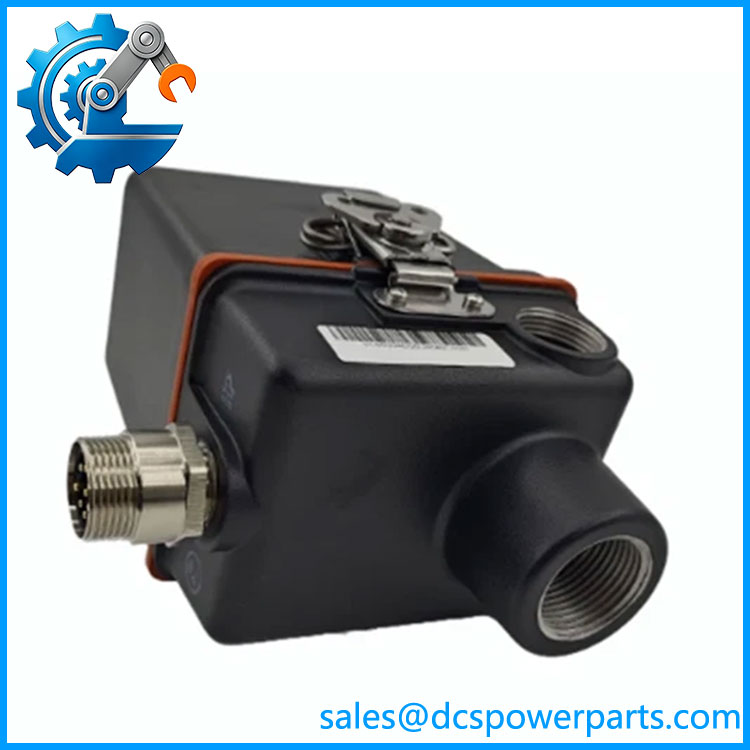
65UV5-1004EQD
Retrofit of Older Flame Scanners
This model is particularly relevant when replacing an older 65UV5 configuration while retaining a BSP-threaded burner sighting arrangement. Do not assume that every 65UV5-1004 model is mechanically interchangeable: the NPT and BSP versions have different process and cooling-air thread specifications.
Hazardous or Demanding Industrial Areas
The scanner uses a sealed NEMA 4X/IP66 housing, and applicable 65UV5-1004 variants have documented agency approvals. Certification must be checked against the actual model marking and installation jurisdiction rather than inferred from the 65UV5 family name alone.
Related Products
- 65UV5-1004QD — NPT-threaded quick-disconnect version with 4-second FFRT.
- 65UV5-1004E — BSP-threaded version with 1-second FFRT but without the EQD quick-disconnect configuration.
- 65UV5-1004 — NPT version with 4-second FFRT and conventional cable connection.
- 65UV5-1004ECEX — BSP version with a CENELEC hazardous-area housing arrangement.
- 59-598-3 — 3-meter eight-conductor cable assembly for the quick-disconnect scanner.
- 59-598-6 — 6-meter cable assembly.
- 59-598-9 — 9-meter cable assembly.
- 59-598-30 — 30-meter cable assembly.
- 59-598-60 — 60-meter cable assembly.
- 59-598-90 — 90-meter cable assembly.
The 59-598 cable family uses an eight-pin female connector, with multiple standard cable lengths documented for the quick-disconnect versions.
Engineer’s Guide — Field Pitfalls to Avoid
1. Do not confuse BSP and NPT versions.
The 65UV5-1004EQD is BSP, with a 1″ BSP sight-pipe connection and 3/4″ BSP cooling-air connection. A visually similar 65UV5-1004QD uses NPT threads. Mixing the two can turn a supposedly simple replacement into a mechanical installation problem.
2. The EQD suffix matters.
The quick-disconnect versions use the 59-598 cable family and an 8-pin connector. If the existing installation uses a different cable arrangement, confirm the wiring before ordering the scanner alone. The scanner is not simply interchangeable based on the base 65UV5 designation.
3. Check FFRT before approving the replacement.
The E/EQD versions are 1-second FFRT, while the corresponding non-E versions are generally 4-second FFRT. A one-second versus four-second response can matter to the burner management logic and safety design.
4. Do not treat the 4–20 mA output as the primary flame-safety signal.
The documentation describes the analog output as a flame-strength signal. The scanner also has dedicated flame and fault relay functions. The actual safety architecture should therefore be checked against the burner management system design rather than replacing a safety relay function with the analog loop.
5. Verify the certification marking on the physical unit.
Documentation covers several 65UV5-1004 variants and different approval combinations. For a hazardous-area replacement, verify the exact model designation, nameplate markings, installation classification and certificate requirements. Do not approve the part solely because another 65UV5 model carries the required approval.
6. Check the optical installation, not just the electrical wiring.
A correctly wired UV scanner can still produce poor flame discrimination if the sighting geometry, lens condition, cooling air, burner alignment or combustion characteristics are wrong. The scanner needs a clear and appropriate view of the flame zone.
FAQ
Is the Fireye 65UV5-1004EQD a flame amplifier?
No. It is an integrated flame scanner. The unit incorporates the UV sensor, microprocessor-based evaluation, self-checking shutter and internal flame relay, eliminating the need for a separate external flame amplifier in the intended configuration.
What is the difference between 65UV5-1004EQD and 65UV5-1004QD?
The most important differences are the thread standard and FFRT. The 65UV5-1004EQD uses BSP connections and has a 1-second FFRT, while the 65UV5-1004QD uses NPT connections and has a 4-second FFRT. Both use the quick-disconnect cable arrangement.
What cable does the 65UV5-1004EQD use?
The quick-disconnect configuration uses Fireye’s 59-598 series eight-conductor cable with an 8-pin female connector. Standard assemblies are available in several lengths, including 3, 6, 9, 12, 15, 30, 45, 60 and 90 meters.
Does the 65UV5-1004EQD provide a 4–20 mA signal?
Yes. The scanner provides a 4–20 mA DC output referenced to flame signal strength, with documentation specifying a maximum connected load of 750 Ω.
Can it be used as a direct replacement for another 65UV5 scanner?
Only after checking the complete part number and installation. Thread type, FFRT, cable/connector arrangement and certification can differ between 65UV5 variants. For a replacement, compare the existing scanner’s nameplate, wiring, sight-pipe thread and burner-management logic before ordering.
Is the 65UV5-1004EQD suitable for SIL applications?
Fireye documentation states that the 65 Series Simplicity scanners are suitable for installations up to and including SIL 2. That statement does not mean the individual scanner automatically makes an entire burner management system SIL 2; the complete safety loop, architecture, proof testing and applicable functional-safety requirements still have to be evaluated.
What should procurement verify before buying a replacement?
At minimum, verify 65UV5-1004EQD, 1″ BSP connection, 1-second FFRT, quick-disconnect configuration, required 59-598 cable, certification markings and actual physical condition. For used or surplus inventory, inspect the UV sensing assembly, lens, connector, housing and nameplate before installation. Exact documentation and certification should match the plant’s jurisdiction and burner-management design.