Description
Druck PDCR250-2967 | Vapour Pressure Sensor | Saab TankRadar Tank Monitoring
Key Technical Specifications
| Parameter | Specification |
|---|---|
| Product Model | PDCR250-2967 |
| Manufacturer | Druck Limited |
| Product Type | Vapour pressure sensor / pressure transducer |
| Series | PDCR 250 |
| Configuration | 2967/B documented |
| Pressure Range | -100 to +300 mbar g |
| Supply Voltage | 5.6–7.0 VDC |
| Hazardous-Area Rating | Ex ia IIC T4 Ga |
| Maximum Input Voltage | 7 V |
| Maximum Input Power | 1 W |
| Maximum Input Current | 250 mA |
| Internal Capacitance | 0 |
| Internal Inductance | 0 |
| Pressure Connection | G 1/4B male |
| Sensing Application | Vapor / tank pressure |
| Typical System | Saab TankRadar / Rosemount marine tank monitoring |
| Installation | Tank instrumentation / pressure sensing point |
| Output | Low-level transducer signal; system-specific |
| Exact Electrical Characteristics | Verify against sensor nameplate and system documentation |
The -100 to +300 mbar g range and 5.6–7.0 V supply are repeatedly documented for PDCR250-2967 units used with Saab TankRadar marine equipment. A separate documented unit carries the same model but a different pressure range, demonstrating why the complete sensor marking and range must be checked before replacement.
Product Introduction
The Druck PDCR250-2967 is a low-pressure measurement transducer designed for applications where relatively small positive or negative pressure changes need to be detected accurately. In marine service, it is associated with vapor-pressure measurement on cargo and slop tanks and forms part of the pressure-measurement chain used by tank monitoring equipment.
The Druck PDCR250-2967 should not be treated as a generic 4–20 mA pressure transmitter. Its documented 5.6–7.0 V supply and low-pressure sensing configuration are important clues that it belongs to a specific measurement architecture. Replacing it with a conventional industrial pressure transmitter can change signal conditioning, intrinsic-safety parameters, calibration, and TankRadar compatibility.
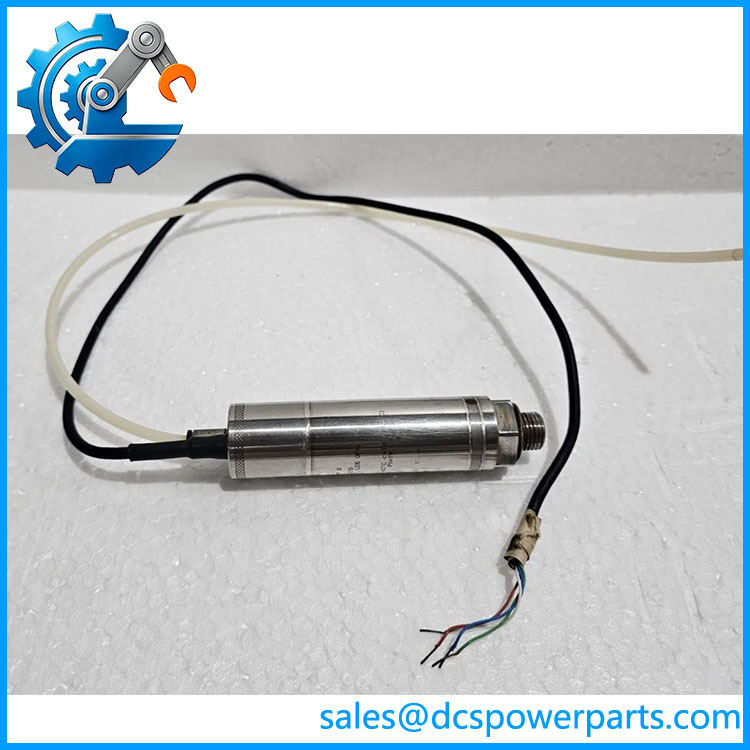
PDCR250-2967
Engineering Pain Point
The biggest replacement problem is matching the pressure range and electrical interface rather than merely matching the model family. Public records show PDCR250-2967 units with different stated pressure ranges, including -100 to +300 mbar g and -100 to +900 mbar g. That means the model identifier alone should not be used to assume the installed sensor’s calibrated range. The nameplate, calibration information, and TankRadar system documentation should be checked before procurement.
Typical Applications
- Marine cargo-tank vapor pressure measurement — Monitoring pressure changes within cargo tanks.
- Slop-tank pressure monitoring — Documented marine equipment records identify units for slop-tank applications.
- Saab TankRadar systems — Used as a pressure-sensing component in marine tank monitoring installations.
- Hazardous-area tank instrumentation — The documented 2967/B configuration carries Ex ia IIC T4 Ga certification.
Technical Pitfalls to Avoid
- Verify the pressure range on the actual sensor. Do not assume every is -100 to +300 mbar g; other records show different range markings under the same model family.
- Do not replace it with a standard 4–20 mA transmitter without engineering review. The documented supply is only 5.6–7.0 V, which is materially different from the normal 10–30 V supply used by many industrial pressure transmitters.
- Check intrinsic-safety parameters. The documented 2967/B unit specifies Ui = 7 V, Pi = 1 W, Li = 250 mA, Ci = 0, and Li = 0 in the referenced equipment record. These values need to remain compatible with the associated IS circuit.
- Confirm the mechanical connection. G 1/4B male is documented for the referenced configuration, but the installed vessel connection and adapter arrangement should be checked rather than inferred from another unit.
- Preserve the measurement scaling. Tank monitoring equipment may use the sensor’s calibrated pressure range when calculating tank vapor pressure. Changing the range without changing system scaling can produce incorrect pressure readings.
- Check the complete TankRadar signal chain. The sensor, wiring, intrinsic-safety interface, signal-conditioning electronics, and monitoring system should be treated as one measurement loop during replacement.
Related Products
- — Related pressure-transducer variant; pressure range and electrical configuration must be checked before considering substitution.
- — Another configuration with different pressure-range characteristics; not automatically interchangeable.
- — Related high-pressure configuration; application range differs substantially from the low-pressure 2967 configuration.
- Druck PDCR251 — Later/related Druck pressure-transducer family; connector, output, range, and system compatibility require verification.
- Druck PDCR300 — Digital-output Druck pressure-transducer family; its electrical interface is fundamentally different from a installation.
- Druck PDCR921-1742 — A different pressure-sensor designation also appearing in marine Saab TankRadar documentation; it should not be cowith .
- Saab TankRadar / Rosemount tank monitoring equipment — System-level equipment associated withnted marine installations.
Procurement and Replacement Note
For a replacement, capture the complete sensor marking, pressure range, serial number, supply voltage, hazardous-area certification, pressure connection, and the exact TankRadar system/interface before ordering.
The strongest documentation available for the commonly referenced 2967/B configuration identifies -100 to +300 mbar g, 5.6–7.0 VDC, and Ex ia IIC T4 Gather records show different pressure ranges, so those values should be treated as configuration-specific rather than universal specifications for every unying 2967 designation.