Description
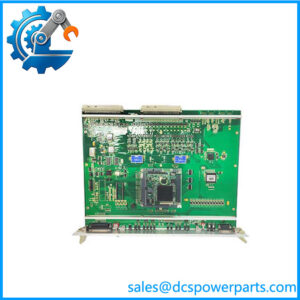
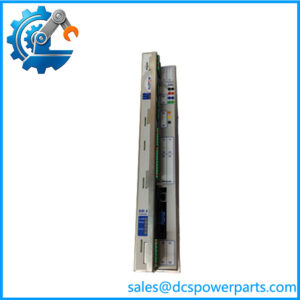
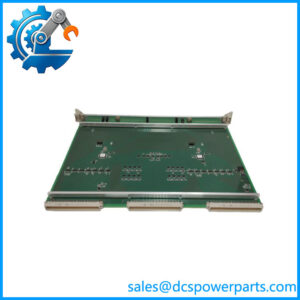
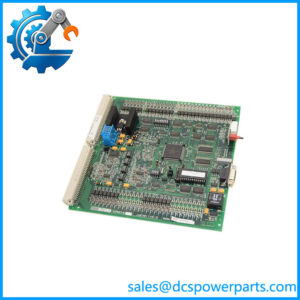
ALSTOM SPU232.1-CAN 029.354630
Product Overview
The ALSTOM SPU232.1-CAN 029.354630 is a CAN-equipped member of the SPU232 control-board family used in legacy ALSTOM automation architectures. Available references describe SPU232 hardware as a single processor unit or processor/control board, with CAN communication forming a key part of the system interface. One model-specific source identifies the exact SPU232.1-CAN 029.354630 as an ALSTOM signal-processing unit, while other SPU232 references identify the family as a single processor board used for real-time industrial control.
From a maintenance standpoint, this distinction matters. The .1-CAN 029.354630 should not be treated as a generic CAN controller that can simply be substituted with another CAN-capable PLC module. Its processor, application software, backplane connection, CAN configuration, and associated control hardware form part of the original system architecture. Public references also show closely related ALSTOM components such as .2 029.366817, which is identified as a later single-processor unit and, in one detailed reference, a processor board for a Semipol D3.1 automatic excitation regulator. That related hardware should not be assumed to be a direct replacement for the .1-CAN version without a system-level compatibility check.
For procurement teams supporting an aging ALSTOM installation, the value of the ALSTOM .1-CAN 029.354630 is primarily in preserving an established control architecture. The part number should be matched exactly, including the designation and 029.354630 number. A board that merely carries a similar marking or provides CAN communication is not enough. This is one of those legacy components where the backplane, firmware image, application configuration, and board revision can matter as much as the processor hardware itself.
Product Introduction
A failed processor board in a legacy control cabinet is rarely a simple hardware swap. The .1-CAN 029.354630 sits within a larger control architecture, so CAN topology, host hardware, software image, and board revision all need to be considered before replacement.
The available documentation consistently points toward -family processor/control functionality with CAN communications, but detailed public data for the exact 029.354630 variant is limited.
Key Technical Specifications
| Parameter | Value |
|---|---|
| Product Model | .1-CAN |
| Part Number | 029.354630 |
| Manufacturer | ALSTOM / ALSTOM-GE |
| Product Family | |
| Product Type | Processor / signal-processing control board |
| Core Function | Embedded control and signal processing |
| Communication Interface | CAN bus |
| CAN Version / Speed | Not reliably established for exact 029.354630 |
| Processor | Not reliably established for exact 029.354630 |
| Memory | Not reliably established for exact 029.354630 |
| Power Supply | Not reliably established for exact 029.354630 |
| Backplane / Host Interface | System-dependent; verify installed rack |
| Firmware | Exact version must be read from the installed hardware/system |
| Installation | System-specific plug-in control-board assembly |
| Application | Legacy ALSTOM control and automation systems |
| Operating Temperature | Not reliably verified for exact variant |
| Protection Rating | Not reliably verified for exact variant |
Important: Some online references describe specific processor speeds, memory capacities, Ethernet interfaces, VMEbus characteristics, and CAN capabilities. Those specifications appear to relate to other revisions, particularly .2 029.366817, rather than providing sufficient evidence for the exact .1-CAN 029.354630. They should not be copied into the purchasing specification for this part without hardware-level confirmation.
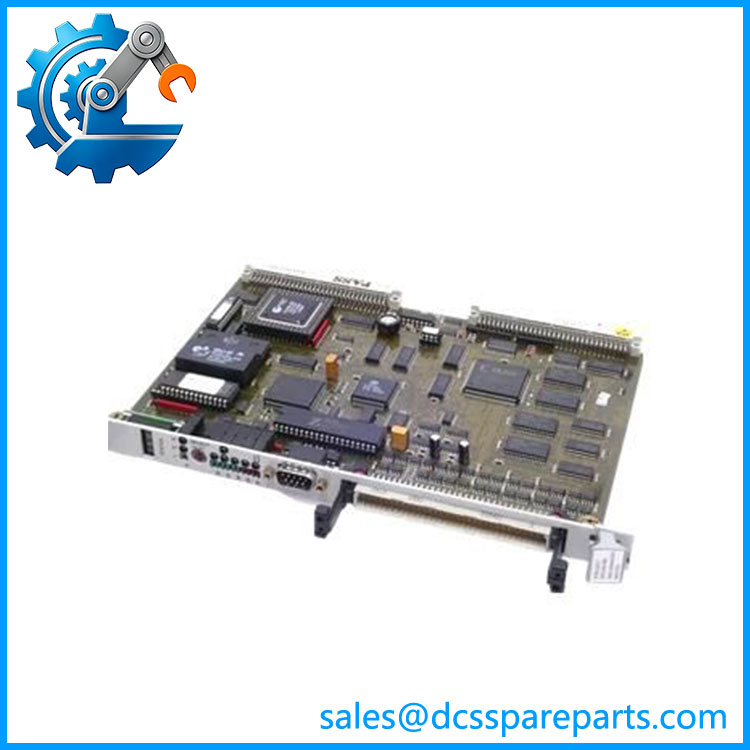
VCS232 590.043158
Major Features and Practical Advantages
CAN-based control communication
The defining feature of the designation is its CAN communication capability. CAN is commonly used for deterministic exchange of control and status information between embedded control nodes. In this application, however, the important question is not simply whether the board supports CAN. The exact CAN node configuration, message mapping, termination, baud rate, and application database must match the existing system.
single-processor architecture
The family is repeatedly identified as a Single Processor Unit or processor board. Related part number 029.366817 is specifically cataloged as an Single Processor Unit and as an .2-5 variant.
That makes the board fundamentally different from a conventional remote I/O module. Losing this type of processor can affect application execution and system-level communication rather than merely removing a group of field I/O points.
Legacy-system maintenance value
For an installed ALSTOM control system, retaining the existing processor architecture can avoid a much larger control-system migration. That does not mean every revision is interchangeable. The exact suffix and part number remain critical.
Compact embedded control architecture
The family is associated with embedded control applications where processing, communications, and system interfaces are concentrated on a board-level assembly. One detailed reference for the later .2 hardware describes VMEbus integration, Ethernet interfaces, processor memory, and VGA functionality, illustrating that -family boards can contain considerably more than a simple CAN interface. Those specifications should be regarded as variant-specific, not automatically applicable to 029.354630.
Documentation verification is essential
The public data for this exact model is thin. One source describes .1-CAN 029.354630 as a signal-processing unit, another identifies as a processor board, while other commercial listings use generic descriptions such as control board or automation module.
For that reason, the safest engineering practice is to verify the physical board against the installed rack documentation before treating any third-party specification as authoritative.
Related Products
- ALSTOM .2-CAN 029.366817 — Later processor hardware; documented as an Single Processor Unit. It should be considered a related processor, not an automatic replacement for the .1-CAN.
- ALSTOM .2-5 029.366817 — Alternate identification associated with the 029.366817 processor. Verify revision and application before substitution.
- ALSTOM CAN 232.1 029.217856 — Listed as a CAN bus communication module in ALSTOM spare-parts references; functionally related to CAN communications but not identified as the same processor board.
- ALSTOM VCM232.3 029.366.820 — VME-bus-related -family hardware; identified in current references as a configuration-management module. Its system role differs from the SPU processor.
- ALSTOM ADA 232 029.202426 — Listed as an analog input/output board within the same broader ALSTOM 232-series hardware ecosystem.
- ALSTOM DAU 232.1 590.043151 — Listed as a DAU 232.1 board; associated with the same legacy ALSTOM control hardware family but serving a different board-level function.
- ALSTOM DIZ 232.1 590.043153 — Listed as a DIZ 232.1 board in the same legacy architecture; not a direct processor replacement.
- ALSTOM SSI 232.1 590.042009 — Listed as an SSI 232.1 signal-interface board, providing another related board-level function within the ALSTOM 232-series ecosystem.
FAQ
What is ALSTOM .1-CAN 029.354630?
It is a legacy .1-CAN processor / signal-processing control board associated with ALSTOM automation hardware. Current references identify CAN communication as a key function, but exact system application should be verified from the installed equipment documentation.
Is .1-CAN a CAN communication module or a processor?
The available evidence points to a processor/control board with CAN communication, rather than a simple standalone CAN interface. Related hardware is explicitly cataloged as a Single Processor Unit.
Can I replace .1-CAN 029.354630 with .2-CAN 029.366817?
Do not assume direct interchangeability. The .2 029.366817 is a related processor, but its documented hardware architecture and revision differ. One reference describes the .2 unit with an AMD Geode LX800 processor, 256 MB RAM, 128 MB flash, VMEbus, Ethernet, and VGA interfaces. Those differences are precisely why a substitution requires an application and hardware compatibility check.
Does this module support CAN 2.0B at 1 Mbps?
CAN capability is associated with the .1-CAN designation, but I would not publish 1 Mbps as a confirmed specification for 029.354630 without the original ALSTOM hardware documentation. Some generic references claim CAN 2.0B and 1 Mbps, but they do not provide sufficiently reliable variant-level evidence for this exact part.
Can I hot-swap the .1-CAN?
Do not assume hot-swap capability. This is a processor/control board, not merely a passive interface. Removing it from an energized legacy control rack can affect processor execution and network communications. Follow the approved ALSTOM maintenance procedure, isolate power where required, and confirm application backup before replacement.
Does the board retain the control application?
The exact memory architecture and application-storage arrangement for 029.354630 are not sufficiently documented publicly. Do not assume that installing a replacement board automatically restores the running application. Before replacement, determine where the application, parameters, CAN configuration, and startup data are stored and whether they must be restored separately.
What should I verify before purchasing this part?
For a maintenance-critical purchase, verify:
- 029.354630
- PCB revision and assembly number
- Installed rack and slot position
- Existing hardware revision
- CAN network configuration
- Host/backplane architecture
- Firmware and application revision
- Connector and physical-board layout
- Test status of the replacement unit
A photograph of the actual nameplate and PCB markings is particularly useful when sourcing a legacy board.
Procurement Note
ALSTOM .1-CAN 029.354630 should be sourced by exact part number and hardware revision. The family contains multiple processor and interface variants, and public listings sometimes merge their specifications. The related 029.366817 .2 is a good example: it has documented processor, memory, VMEbus, Ethernet, and VGA characteristics that should not automatically be attributed to the earlier .1-CAN hardware.
For legacy control-system procurement, verify the board revision, installed system, CAN configuration, and application compatibility before accepting an apparently similar assembly as a substitute.