Description
ABB SACO 16D3 Digital Annunciator Unit
Key Technical Specifications
| Parameter | Specification |
|---|---|
| Product Model | SACO 16D3 |
| Manufacturer | ABB |
| Product Family | SPACOM |
| Product Type | Digital annunciator / alarm annunciator |
| Number of Alarm Channels | 16 |
| Input Signal | NO / NC contacts, rising/falling edge, pulse counter |
| Internal Field Contact Voltage | 48 VDC +20% |
| Closed Contact Loop Current | 4 mA ±20% |
| Input / Reset Delay | 5 ms, 20 ms, 100 ms, 1 s, 5 s, 20 s, 60 s, 160 s |
| Pulse Counter Frequency | Up to 3 Hz |
| Pulse Counter Range | 0–29999 |
| Event Register | 50 latest events |
| Output Relays | 20 total |
| Fixed Group Alarm Relays | 2 |
| Audible Alarm Relay | 1 |
| Self-Supervision Relay | 1 |
| Additional Signal/Group Relays | 16 |
| Relay Contact Rating | 3 A / 250 V AC or DC |
| Communication Protocol | SPA bus |
| Communication Interface | RS-485 |
| Communication Speed | 300 to 9600 baud, selectable |
| Bus Connection | SPA-ZC17 / SPA-ZC21 family |
| Auxiliary Supply | 80–265 V AC/DC or 18–80 V DC |
| Power Demand | 10 W minimum / 15 W maximum |
| Dielectric Test | 2 kV, 50 Hz, 1 min |
| Impulse Test | 5 kV, 1.2/50 µs, 0.5 J |
| Service Temperature | -10 to +55°C |
| Storage Temperature | -40 to +70°C |
| Humidity | <95% at +40°C, specified test condition |
| Enclosure Protection | IP54 |
| Weight | Approx. 3.1 kg |
ABB’s technical manual specifies the 16 alarm channels, internally generated 48 VDC field-contact supply, programmable delays, pulse-counting capability, relay arrangement, SPA-bus communication, power-supply ranges, and environmental ratings above.
Product Introduction
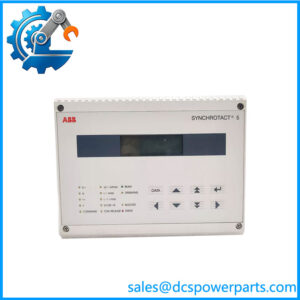
The ABB SACO 16D3 is a microprocessor-based digital annunciator designed for supervision of discrete alarm and signaling contacts in power plants, substations, industrial processes, marine installations, and similar facilities. It provides 16 independently configurable alarm channels, front-panel LED indication, first-out alarm display, audible alarm control, event recording, acknowledge/reset functions, and relay retransmission. ABB identifies the SACO 16D3 as part of the SPACOM secondary-equipment system.
The unit can operate as a standalone annunciator or participate in a larger supervision and event-reporting system through its serial interface and SPA bus. Each channel can be configured for NO or NC contacts, edge detection, or pulse counting. The internal power supply also generates the field-contact voltage, so a separate field-contact supply is not required for the standard architecture.
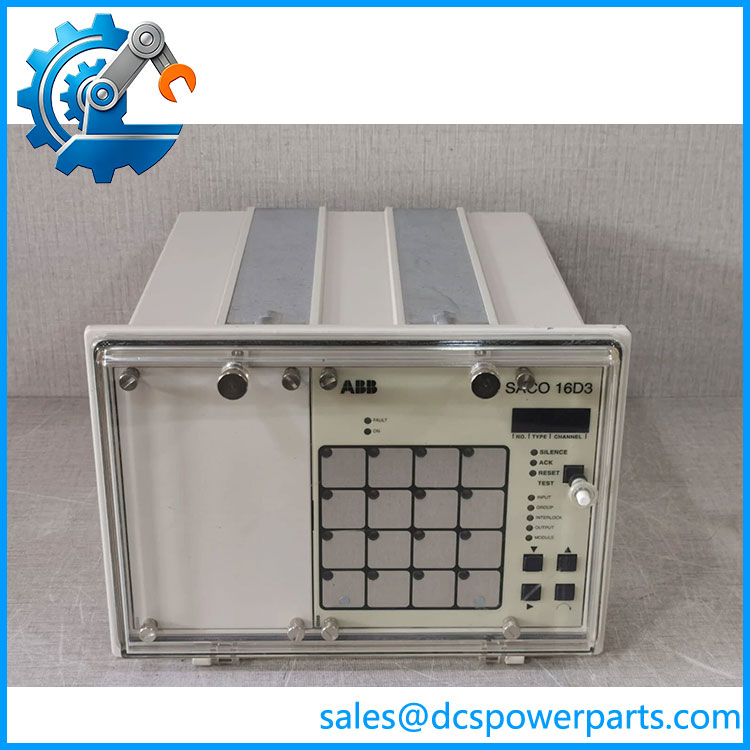
ABB SACO 16D3
Application Scenarios & Field Pitfalls — The Engineer’s Perspective
Engineering Pain Point
The SACO 16D3 is often mistaken for a conventional digital input module because it monitors 16 discrete signals. That description is incomplete. It contains its own alarm sequencing, first-out indication, event memory, audible alarm handling, interlocking functions, relay retransmission, self-supervision, and SPA communication. Replacing it with a generic 16-channel DI module would remove significant alarm-management functions from the original architecture.
Typical Applications
- Substation alarm annunciation — Monitoring breaker, protection, equipment, and auxiliary alarm contacts.
- Power plant alarm systems — First-out indication and audible alarm handling for process and electrical faults.
- Industrial process installations — Supervising discrete process conditions and transmitting alarm states to higher-level systems.
- Marine and offshore installations — ABB specifically documents the SACO 16D3 for marine and offshore applications.
Technical Pitfalls to Avoid
- Verify the auxiliary supply version.
The SACO 16D3 can use either the SPGU 240A1 for 80–265 V AC/DC or the SPGU 48B2 for 18–80 VDC. These are different internal power-supply modules. Do not assume that every SACO 16D3 accepts the same supply. - Do not apply an external voltage directly to the alarm inputs without checking the circuit.
The annunciator generates its own 48 VDC field-contact voltage and expects potential-free field contacts in the documented architecture. - Preserve channel programming.
Input delay, reset delay, contact type, alarm sequence, reflash grouping, interlocking, and pulse-counter configuration are programmable. A replacement unit with factory parameters may not behave like the removed unit. - Record the SPA address and baud rate.
The SPA slave address is configurable from 1–99, while communication speed can be selected from 300 to 9600 baud. Incorrect settings can make a physically healthy unit appear to have a communication failure. - Check the relay loading.
The relay contacts are rated at 3 A / 250 V AC or DC, but DC breaking capability is lower and depends on voltage and load time constant. Do not interpret 3 A as a universal DC switching rating. - Preserve the parameter memory when servicing the alarm module.
ABB’s manual identifies a plug-in parameter memory that can be transferred to a replacement alarm module, allowing the previous operating values to be retained. ESD precautions are specifically required when handling the electronic circuit.
Related Products
- ABB SACO 16D1 — Smaller/earlier SACO annunciator variant; verify channel architecture and configuration before substitution.
- ABB SACO 64D4 — 64-channel digital annunciator intended for larger alarm systems; it is not a direct 16-channel replacement.
- ABB SACO 148D4 — Higher-channel SACO annunciator for larger centralized alarm applications.
- ABB SACO 64C5 — Related SACO signal/alarm equipment for larger annunciator architectures.
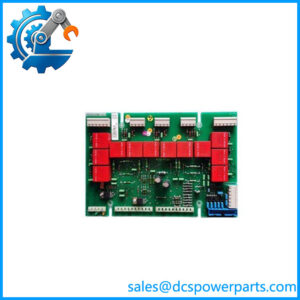
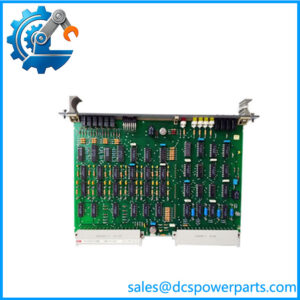
- ABB SWIM 2A1 — Input/output module used within the SACO 16D3 assembly.
- ABB SWOM 16A1 — Output relay module providing the additional 16 relay outputs.
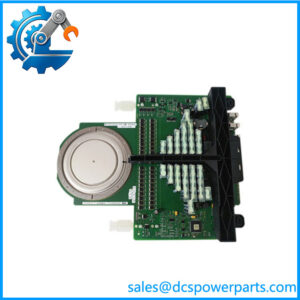
- ABB SPGU 240A1 — Internal auxiliary power module for 80–265 V AC/DC supply.
- ABB SPGU 48B2 — Internal auxiliary power module for 18–80 VDC supply.
- ABB SPA-ZC 17 / SPA-ZC 21 — Communication connection modules used with the SACO/SPA bus interface.
Procurement and Replacement Note
For an ABB SACO 16D3 replacement, do not specify the unit by model name alone. Confirm the auxiliary supply module, installed SWIM/SWOM configuration, SPA communication arrangement, channel programming, relay wiring, and parameter memory.
The supply variant is particularly important: ABB documents both 80–265 V AC/DC and 18–80 VDC power-supply configurations. The field wiring is also not equivalent to a standard PLC DI card because the SACO 16D3 internally supplies approximately 48 VDC to its potential-free contact circuits.
For a legacy installation, photograph and document every terminal, record the SPA address and communication rate, export or manually record channel parameters, and preserve the existing parameter memory where applicable before removing the unit. That information is more valuable for a successful replacement than simply matching the front-panel appearance.