Description
Product Overview
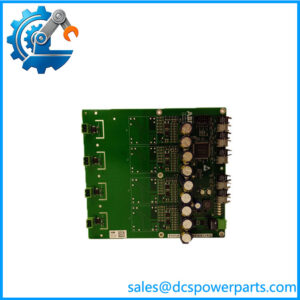
The ABB NTCS04 Control I/O Termination Unit is an interface component used in ABB Bailey industrial control systems to connect field wiring with compatible control I/O hardware. It is documented in the INFI 90 product family and is also identified in ABB’s Symphony Plus catalog as a termination unit for SPCIS control I/O and SPQRS quick-response I/O modules. The NTCS04 is not a standalone controller or communication processor; its function is to provide the required termination and signal paths for the specific hardware configuration.
The documented NTCS04 configuration supports a combination of analog and digital signals. Its manual lists four analog inputs, three digital inputs, two analog outputs, and four digital outputs, with signal capabilities that include 4–20 mA analog inputs, 1–5 VDC or 4–20 mA analog outputs, and specified 24 VDC or 125 VDC digital input arrangements. These capabilities must be interpreted within the applicable wiring diagram and connected module configuration, not as universal ratings for every NTCS04 installation. The manual also documents dipshunt settings that determine signal assignments and station connections.
For maintenance engineers and procurement teams, the principal concern is compatibility with the existing control hardware. A termination unit that looks physically similar may have different connection assignments or configuration requirements. Before ordering an ABB NTCS04, verify the full model marking, the connected SPCIS, SPQRS, or legacy INFI 90 hardware, the termination cable, and the installed dipshunt configuration. Preserve the original wiring records before removal, and request inspection evidence for any used or refurbished unit. Correct identification and configuration are essential to restoring the intended field-signal paths.
Product Introduction
The NTCS04 is used where compatible ABB control hardware requires a dedicated field termination interface. In older Bailey INFI 90 installations, it can form part of a control-station arrangement; in Symphony Plus HR Series systems, ABB identifies it as a termination unit for SPCIS and SPQRS modules. The exact role therefore depends on the system generation and installed hardware rather than the model number alone.
When replacing the unit, document terminal assignments, dipshunt positions, station connections, and cable routing before disconnecting the existing hardware. Check the condition of terminal blocks and connectors, then verify the replacement against the applicable installation manual. For surplus or refurbished equipment, request clear photographs, condition disclosure, and evidence of testing. A visual inspection does not confirm that every configured signal path will operate correctly in the target system.
Key Technical Specifications
| Parameter | Specification |
|---|---|
| Product Model | |
| Manufacturer | ABB Bailey Controls |
| Product Type | Control I/O termination unit |
| System Family | Bailey INFI 90 / Network 90; Symphony Plus HR Series applications |
| Primary Function | Field-signal termination and connection interface |
| Analog Inputs | 4 documented channels |
| Digital Inputs | 3 documented channels |
| Analog Outputs | 2 documented channels |
| Digital Outputs | 4 documented channels |
| Analog Input Capability | 4–20 mA DC |
| Analog Output Capability | 1–5 VDC or 4–20 mA DC |
| Digital Input Capability | 24 VDC or 125 VDC, as documented for the applicable configuration |
| Configuration | Application-specific dipshunts and terminal assignments |
| Compatible Hardware | SPCIS and SPQRS modules in Symphony Plus; legacy control-station applications documented for INFI 90 |
| Mounting | Compatible field termination panel or documented system mounting arrangement |
| Operating Temperature | 0°C to 70°C |
| Relative Humidity | 0–95%, noncondensing, as listed in the manual |
| Surge Protection | Manual states compliance with IEEE-472-1974 surge withstand testing |
| Protection Rating | No IP rating verified |
| Communication Protocol | Not a standalone network communication module |
The signal counts and ratings above are from the instruction manual and must be checked against the specific application. Do not use them to infer the electrical ratings of a connected controller or I/O module.
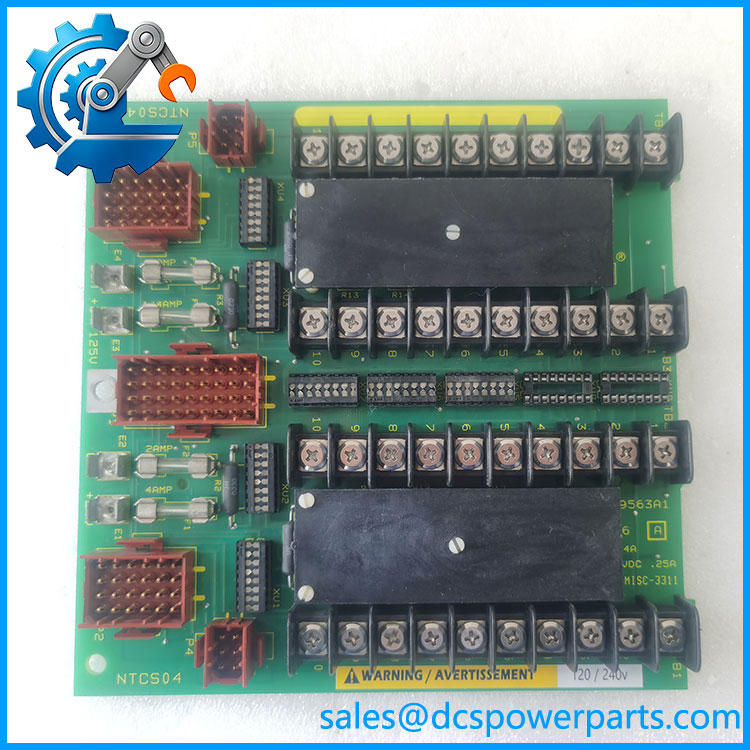
NTCS04
Related Products
The following components are related to applications but are not automatic substitutes:
- SPCIS — Symphony Plus HR Series control I/O module.
- SPQRS — Symphony Plus HR Series quick-response I/O module.
- IMCIS02 — Legacy Bailey control I/O slave module.
- IISAC01 — Analog control station documented with termination hardware.
- NKTU01 — Termination-unit cable listed in the INFI 90 hardware family.
- NFTP01 — Field termination panel used to mount compatible termination units.
Frequently Asked Questions
Q1: What is the ABB used for?
It provides termination and signal connections between compatible field wiring and ABB control I/O or control-station hardware. It does not function as a standalone controller.
Q2: Is the compatible with Symphony Plus?
Yes. ABB’s Symphony Plus product catalog identifies as a termination unit for SPCIS and SPQRS modules. Confirm the applicable hardware generation and configuration before purchasing.
Q3: What signal types does the support?
The manual documents analog and digital signal connections, including 4–20 mA analog inputs, 1–5 VDC or 4–20 mA analog outputs, and specified digital input arrangements. The actual supported signals depend on the application and wiring configuration.
Q4: Does the require dipshunt configuration?
Yes. The legacy INFI 90 documentation includes dipshunt settings for signal and station assignments. Use the correct settings for the assembly revision and connected module rather than copying settings from a different installation.
Q5: Can it be replaced with another termination unit that has similar signal channels?
Not without checking the approved hardware arrangement. Terminal assignments, cables, configuration, and connected modules can differ even when the broad function is similar.
Q6: What should I verify before ordering?
Confirm the model marking, installed system family, connected module, termination cable, terminal configuration, and physical condition. Request photos and test documentation if the unit is used or refurbished.
Q7: What environmental conditions are documented?
The manual lists an operating temperature range of 0°C to 70°C and noncondensing relative humidity of 0–95%. Verify the requirements in the applicable manual and assess the actual cabinet environment.
Procurement Recommendation
For the ABB , prioritize the exact hardware application and wiring configuration over broad catalog descriptions. Verify the connected module, terminal assignments, dipshunt settings, and termination cable before approving a replacement. For used or refurbished stock, request clear identification photographs and documented inspection or functional checks. Do not commission the unit until the installed signal configuration has been checked against the applicable ABB manual.