Description
Product Introduction (Non-Templated)
Legacy instrumentation packages and specialized third-party sub-controllers often rely on hardwired serial communication lines that demand robust, interference-resistant hardware gateways to talk cleanly with plant-wide DCS platforms. Interfacing these disparate systems without risking data corruption or port lockups requires precise protocol handling right at the cabinet level—which is precisely where this dual-channel interface module steps in.
Engineers upgrading aging control networks or expanding legacy process nodes depend on this specific serial link to maintain reliable telegram exchanges. Integrating it into an existing rack architecture avoids costly custom gateway engineering while preserving historical field connections during a live DCS system migration.
Key Technical Specifications
- Part Number: 3BSE018124R1
- Module Type: Dual RS-232C Communication Module
- Number of Channels: 2 independent serial ports
- Nominal Voltage: 24 V DC
- Power Consumption: 3 W
- Operating Temperature: -20 °C to +70 °C (-4 °F to +158 °F)
- Storage Temperature: -40 °C to +85 °C (-40 °F to +185 °F)
- Dimensions (HxWxD): 120 mm x 50 mm x 125 mm
- Weight: 0.2 kg (0.44 lb)
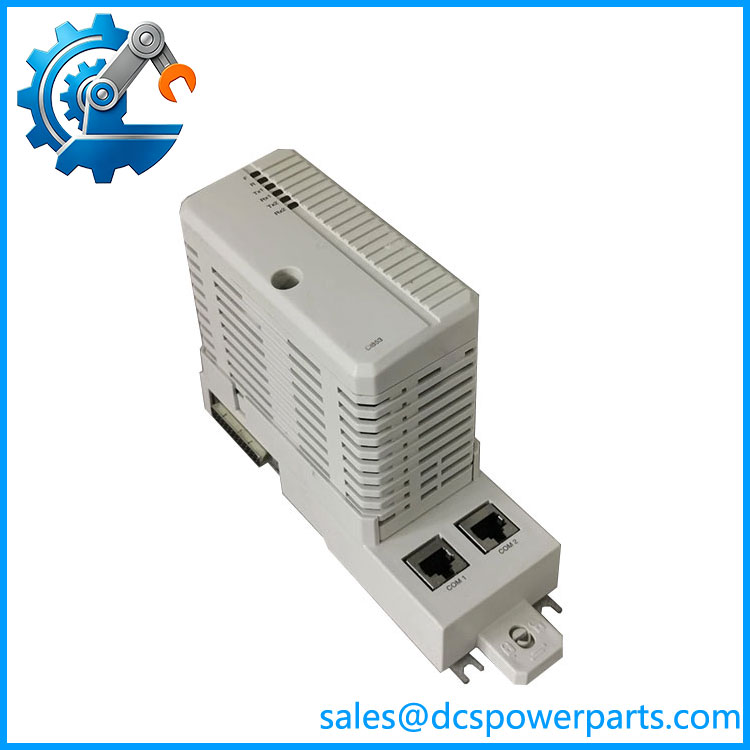
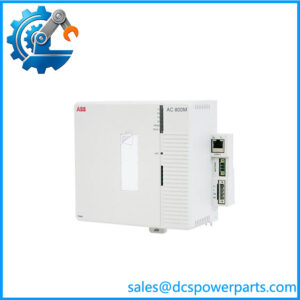
CI853-3BSE018124R1
Application Scenarios & Pain Points
When an unexpected ground loop or noise transient corrupts a serial data stream on a continuous chemical line, vital monitoring data from field weigh scales or analyzers drops out instantly, blinding operators to key process shifts.
- Chemical Batching: Deployed to link intelligent weighing terminals and barcode scanners directly to the control network with isolated serial handshaking.
- Power Generation: Used inside turbine auxiliary skids to interface legacy vibration monitoring racks back into the main distributed control architecture.
- Water Treatment: Installed on remote telemetry nodes to manage point-to-point Modbus RTU communications with older field flow meters.
A wastewater treatment plant in Ohio faced intermittent packet drops on a critical chlorine analyzer loop due to induced electrical noise from nearby medium-voltage VFD cables. Swapping an unverified generic converter for this factory-rated ABB dual-serial module cleared the communication errors completely, restoring stable polling rates before regulatory reporting deadlines.
Related Products
- CI854A (3BSE022936R1): ABB PROFIBUS DP Master communication module used alongside serial cards for fieldbus device integration.
- CI856K01 (3BSE027468R1): S800 I/O S200 I/O field bus communication unit for alternative remote rack topologies.
- AI810 (3BSE008516R1): S800 16-channel analog input module sharing the same modular DIN-rail mounting base framework.
- DO810 (3BSE008510R1): S800 16-channel digital output module deployed in adjacent slots for discrete control actions.
- TB840A (3BSE038169R1): Module termination unit (MTU) base plate required for mounting redundant or single I/O modules safely.
- PP836H (3BSE092983R1): ABB operator panel often used downstream of network controllers to visualize system diagnostics.
The Engineer’s Guide: Field Pitfalls to Avoid
- WARNING: Unshielded Serial Cable Routing. Running RS-232 communication cables parallel to high-voltage power conduits induces severe common-mode noise that locks up the UART chips. How to avoid: Use foil-shielded twisted-pair cables with the shield grounded strictly at one end to a clean cabinet earth bar.
- WARNING: Hot-Plugging onto Powered MTUs. Pushing the CI853 card onto an unmanaged base while the 24V supply is active can spark backplane pins and fry sensitive transceiver components. How to avoid: Always isolate local rack power or verify slot alignment guidelines before seating the module onto its termination unit.
- WARNING: Incorrect Baud Rate and Parity Handshaking. Mismatching stop bits or parity settings between the module configuration file and the field instrument results in silent packet drops with zero error indications on the front LEDs. How to avoid: Cross-reference your engineering tool parameter settings (such as ABB Control Builder) against the physical device manual prior to downloading configuration changes.
Frequently Asked Questions (FAQ)
- Can I configure both ports on the CI853 to run independent protocols simultaneously? Well, technically the hardware supports distinct serial configurations per port, but processing overhead depends heavily on your system’s overall CPU load and chosen protocol stack.
- What do the diagnostic LED indicators on the front panel signify during startup? A steady green run light confirms healthy internal power and self-test completion, while flashing red error patterns typically point to configuration mismatches or active communication timeouts on one of the serial streams.
- Is this module compatible with older Advant Controller systems as well as modern AC 800M controllers? Yes, the CI853 is designed to integrate smoothly across multiple generations of ABB hardware families, provided your software version library includes the correct device object descriptions.
- What type of physical connectors does the module use for the RS-232 lines? It typically utilizes standard D-sub or modular terminal configurations depending on the specific MTU baseplate pairing, requiring proper pre-fabricated adapter whips for clean field wiring.
- How should I verify a suspected hardware failure before ordering a replacement? Swap the suspect module into a known working slot on the same rack or loopback the TX/RX pins with a terminal program to test internal UART health. If internal loopbacks fail while power and backplane seating are verified, the module requires replacement.