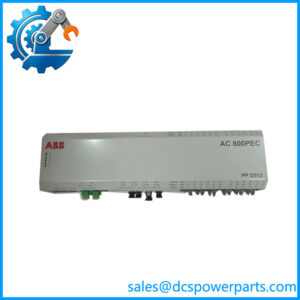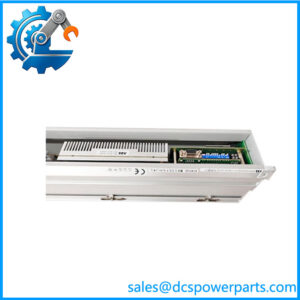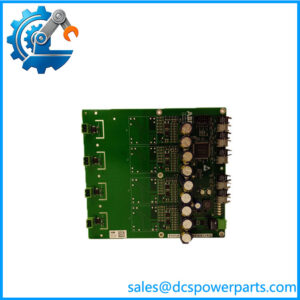
Description
Key Technical Specifications
| Parameter | Value |
|---|---|
| Product Model | AO2000 LS25 |
| Manufacturer | ABB Measurement & Analytics |
| Product Series | Advance Optima AO2000 |
| Product Type | In-Situ Laser Gas Analyzer Module |
| Measurement Principle | Tunable Diode Laser Absorption Spectroscopy (TDLAS) |
| Optical Method | Single-line near infrared absorption spectroscopy |
| Measurement Arrangement | Transmitter / receiver cross-stack configuration |
| Installation Type | In-situ or extractive measurement |
| Sample Components | O₂, CO, CH₄, NH₃, H₂O, CO₂, HCl, H₂S, HCN, HF and others depending on configuration |
| Optical Path Length | Typically 0.5 to 15 m |
| Response Time | Less than 2 seconds without signal averaging |
| Communication | RS-232, optional Ethernet TCP/IP |
| Power Supply | 24 VDC or external AC power supply unit |
| Protection Rating | IP66 transmitter and receiver housing |
| Purging System | Continuous optical window purge |
| Certifications | ATEX / IECEx / CSA variants available |
| Application Areas | Power plants, chemical, petrochemical, waste incineration, cement, pulp and paper |
Application Scenarios & Pain Points
Gas analyzers installed in harsh process areas face a simple problem: the measurement path is exposed to everything happening inside the process. Dust, corrosive gases, high temperature, and unstable sampling conditions can quickly affect traditional systems.
Typical applications:
- Power Generation: Used for combustion optimization, emission monitoring, and flue gas analysis where fast response is required during load changes.
- Chemical Processing: Applied for monitoring gases such as NH₃, HCl, and other process components in reaction and treatment systems.
- Waste Incineration: Supports continuous emission measurement where dust loading and corrosive compounds challenge conventional sampling equipment.
- Petrochemical Facilities: Used for process monitoring in pipes, stacks, and reaction chambers requiring direct measurement.
Field note: A combustion system showed inconsistent oxygen readings after years of operation. The extraction probe and conditioning system required frequent maintenance. After converting to an LS25 direct measurement arrangement, the plant reduced sampling-related interruptions and improved measurement stability.
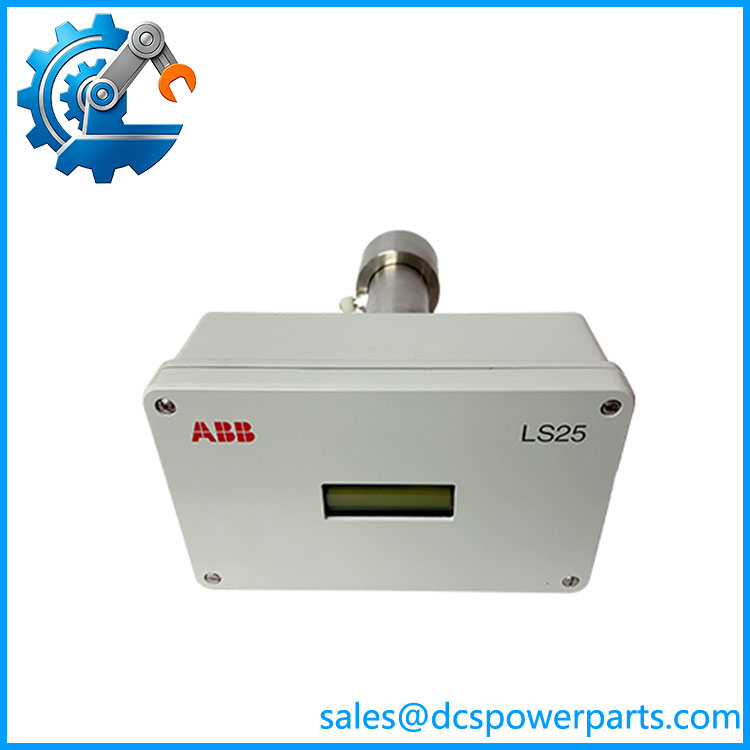
AO2000 LS25
Related Products
- ABB AO2000 Uras26 — Infrared photometer analyzer module for gases such as CO, CO₂, CH₄, and other infrared-active components. Used when extractive measurement is preferred.
- ABB AO2000 Limas21 UV — UV photometer module for components such as NO, NO₂, SO₂, H₂S, and Cl₂. Suitable for emission monitoring applications.
- ABB AO2000 Magnos206 — Paramagnetic oxygen analyzer module. Used for O₂ measurement where extractive sampling is acceptable.
- ABB AO2000 Caldos25 — Thermal conductivity analyzer module for gases with different thermal conductivity characteristics.
- ABB Fidas24 — Flame ionization detector module for hydrocarbon measurement applications.
- ABB Central Processing Unit — Main control unit for combining and managing multiple analyzer modules within the Advance Optima platform.
- ABB LS25 Transmitter Unit — Optical transmission side of the laser analyzer system. Works together with the receiver unit for cross-stack measurement.
- ABB LS25 Receiver Unit — Detector assembly receiving transmitted laser signals and supporting concentration calculation.
The Engineer’s Guide: Field Pitfalls to Avoid
⚠️ Incorrect Optical Alignment
The LS25 depends on accurate alignment between transmitter and receiver. A small mechanical shift can reduce transmission quality.
How to avoid: Verify flange position, alignment mechanism, optical signal level, and purge condition during commissioning.
⚠️ Insufficient Purge Gas Quality
Dirty or moisture-contaminated purge air can cause deposits on optical windows.
How to avoid: Confirm purge gas cleanliness, pressure, flow rate, and filtration before startup.
⚠️ Wrong Gas Application Configuration
Different gases require different laser wavelengths and calibration settings.
How to avoid: Confirm the measured component, process conditions, pressure, temperature, and optical path length before ordering.
Frequently Asked Questions (FAQ)
What is the ABB LS25 used for?
The is an in-situ laser gas analyzer module used for continuous measurement of specific gas concentrations through TDLAS technology. It is designed for direct installation on pipes, stacks, and process chambers.
What gases can the measure?
The available gas measurement depends on the configured laser wavelength. Typical applications include:
- Oxygen (O₂)
- Carbon monoxide (CO)
- Methane (CH₄)
- Water vapor (H₂O)
- Ammonia (NH₃)
- Hydrogen chloride (HCl)
Does the require a sample extraction system?
Not necessarily. The is designed for direct in-situ or cross-stack measurement, which can eliminate many sample handling components. Some applications may still require additional equipment depending on process conditions.
Can the operate in hazardous areas?
Yes. Certain versions are available with ATEX, IECEx, and CSA certifications for hazardous-area applications.
What should be checked before replacing an existing ?
Verify:
- Exact gas measurement application
- Transmitter and receiver arrangement
- Optical path length
- Process flange dimensions
- Purge system configuration
- Communication settings
Why does an show low transmission alarms?
Common causes include:
- Dirty optical windows
- Poor alignment
- Insufficient purge flow
- Excessive dust concentration
- Incorrect installation distance
Is a refurbished ABB suitable for process measurement service?
A tested refurbished unit can be suitable when optical performance, laser operation, communication functions, transmitter/receiver alignment, and process compatibility are verified before installation.