Description
Product overview
When maintaining a legacy automation system, identifying the exact role of a specialized module is essential before planning a replacement. The OLDI 56SAM-844 is cataloged as a Special Application Module, but the available descriptions do not establish a consistent, verified channel configuration, communication interface, or electrical specification. Some listings associate it with ControlLogix-related applications, while others provide conflicting descriptions of its function. Those claims should not be treated as confirmed engineering data.
For procurement and maintenance, the safest approach is to identify the 56SAM-844 from its physical label, connector arrangement, and installed system documentation. Confirm whether the application requires a dedicated controller interface, data-exchange function, or another specialized role. Do not assume that specifications published for unrelated OLDI modules apply to this model.
Key technical specifications
| Parameter | Specification |
|---|---|
| Product model | 56SAM-844 |
| Manufacturer / brand | OLDI / Online Development Inc., as listed by suppliers |
| Product type | Special Application Module |
| Product family | Exact series designation not independently verified |
| Host-system compatibility | Must be confirmed for the installed system |
| Working voltage | Not reliably verified |
| Input / output channels | Not reliably verified |
| Communication protocol | Not reliably verified |
| Interface type | Confirm from the module label and technical documentation |
| Working temperature | Not reliably verified |
| Installation method | Confirm from the host rack or mounting arrangement |
| Protection rating | Not reliably verified |
| Firmware requirements | Not verified |
| Operating accuracy | Not applicable or unverified until the module’s exact function is established |
Specification note: Some supplier descriptions assign the 56SAM-844 a 24 VDC supply, Modbus RTU, Ethernet/IP, or analog I/O functionality. These claims conflict and could not be confirmed from an authoritative model-specific datasheet. They should not be used as purchasing or installation requirements without further evidence.
Major features and procurement considerations
1. Specialized application role
The product is identified as a Special Application Module rather than a clearly specified standard digital or analog I/O module. Its exact role must be established from the original documentation before deciding whether it handles data exchange, application-specific processing, or another system function.
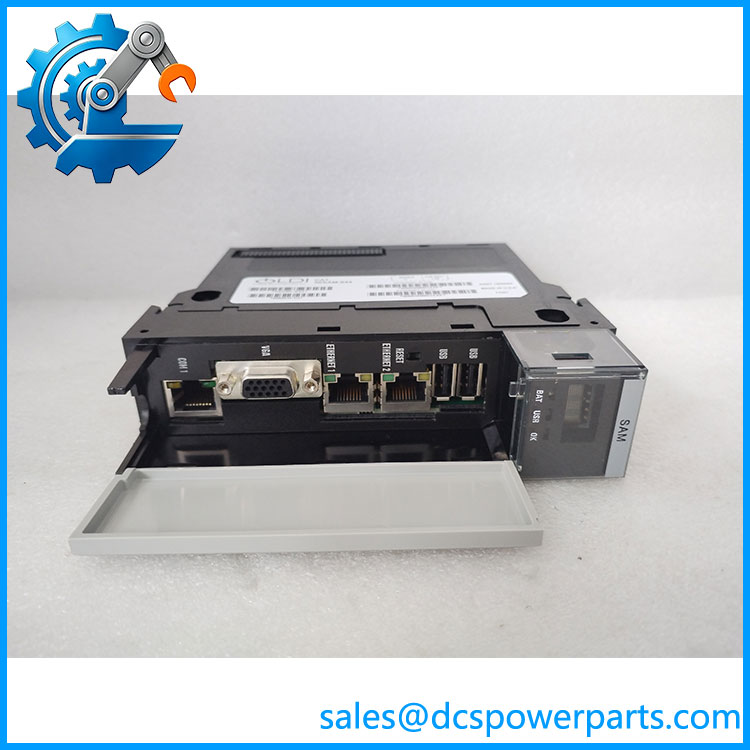
56SAM-844
2. Host-system verification
A replacement must match the intended controller architecture and its supported module interfaces. Confirm the host equipment, slot or mounting arrangement, firmware dependencies, and any associated configuration software before approving a substitute.
3. Connector and hardware identification
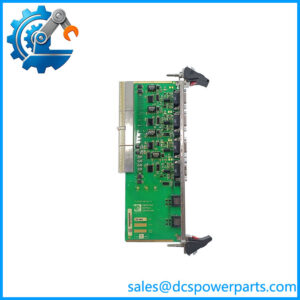
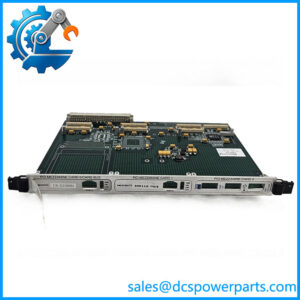
Photographs of the front panel, rear label, connector layout, and PCB revision can help distinguish variants. These details are especially useful when the original datasheet is unavailable or the installed equipment is part of a legacy system.
4. Electrical specification control
Do not select a replacement based on an unverified voltage, channel count, or protocol claim. Confirm the supply requirements and signal connections from the manufacturer’s documentation or the original unit’s markings before installation.
5. Condition and test evidence
For a new-surplus or refurbished unit, request the actual part-number label, physical inspection results, available functional-test records, and written warranty terms. A listing marked as available does not by itself establish that the module has been tested against the intended application.
Application scenarios and common pain points
Because the precise function of the 56SAM-844 remains unverified, the following are procurement and maintenance scenarios, not confirmed application claims:
- Legacy automation maintenance: Identifying a specialized module already installed in a control cabinet.
- Replacement planning: Matching the original part number and hardware revision before removing a failed unit.
- System refurbishment: Establishing whether an existing application depends on a particular module interface or firmware version.
- Spare-parts management: Recording verified electrical and mechanical details to avoid future substitution errors.
Common procurement risks include conflicting product descriptions, missing manuals, incorrect voltage assumptions, unverified protocol compatibility, and confusion between similarly named modules. Resolving these uncertainties before purchase is more reliable than relying on generic performance claims.
Related products and identifiers
No direct replacement or compatible accessory can be confidently recommended from the available evidence. For an accurate comparison, start with the original equipment documentation and the complete module marking rather than selecting a related part solely because it shares the OLDI brand.
Engineer’s guide: three checks before ordering
1. Verify the physical identification. Obtain a clear photograph of the label showing 56SAM-844, the manufacturer, and any additional revision or serial information.
2. Identify the installed host system. Record the controller or rack model, the module’s slot or mounting position, connected equipment, and any configuration software or firmware requirements.
3. Request authoritative technical data. Ask for the original datasheet or manual, confirmed electrical ratings, interface details, and evidence that the supplied unit matches the required hardware revision.
Important: Do not connect the module based on an unverified 24 VDC, Ethernet/IP, Modbus, or analog I/O specification. Incorrect assumptions about power or signal connections can damage equipment or disrupt the control system.
Frequently asked questions
1. What is the OLDI 56SAM-844?
It is listed as a Special Application Module associated with Online Development Inc. The exact function has not been conclusively established from the available technical references.
2. Is the 56SAM-844 an analog output module?
That description appears in some supplier material, but it is not consistently supported by other listings. Confirm the function from the original datasheet or the installed system documentation before relying on it.
3. Does it support ControlLogix?
Some descriptions associate OLDI modules with ControlLogix integration. Direct compatibility of the 56SAM-844 with a specific ControlLogix chassis or controller remains unverified.
4. What is its working voltage?
A reliable model-specific voltage rating could not be confirmed. Check the unit label and original technical documentation before connecting power.
5. Can another OLDI module replace it?
Not without a documented compatibility statement. Compare the intended function, electrical requirements, connector layout, firmware dependencies, and host-system support.
6. What should buyers verify when sourcing a replacement?
Request the complete part number, actual-unit photographs, condition details, available functional-test evidence, and warranty terms. Ask the supplier to confirm the module’s exact function rather than relying on a generic product description.
7. What information would help identify it more precisely?
A photo of the front and rear labels, connector arrangement, and the controller or rack where it is installed would be most useful. With those details, the model identification and compatibility assessment can be narrowed down.